Tracing Phuket wildlife to the Jurassic era
Tracing Phuket wildlife to the Jurassic era — confirmed details at this stage for Phuket readers.
*Tracing Phuket wildlife to the Jurassic era — confirmed details at this stage for Phuket readers.*
Published: 2026-03-17 00:13 UTC Event date: 2026-03-15
Tracing Phuket wildlife to the Jurassic era
Phuket’s rich biodiversity can be traced back millions of years, with several local bird species having roots in the age of dinosaurs. On 15 March 2026, a closer look at common wildlife in Phuket revealed fascinating connections to the Jurassic period, offering insights into the ancient lineage of birds found across the island’s beaches, ponds, and forests.
Ancient Birds of Phuket: Cormorants and Their Dinosaur Connection
A recent observation of a Little Cormorant in a Phuket backyard highlighted the species’ ancient origins. Cormorants, which are regularly seen around water bodies in Phuket, have existed for approximately 35 million years. Their evolutionary history links them to early feathered dinosaurs such as Archaeopteryx, which lived about 150 million years ago in what is now southern Germany. While modern cormorants are not direct descendants of Archaeopteryx, their lineage demonstrates how certain bird characteristics have persisted since the time of the dinosaurs.
Hornbills in Phuket: Survivors from the Age of Dinosaurs
Hornbills, occasionally sighted in Phuket’s forests, represent another bird family with a deep evolutionary history. These birds first appeared in Africa around 48 to 50 million years ago before spreading into Asia. The hornbill family split from their closest relatives, the hoopoes, approximately 75 million years ago, surviving the mass extinction event that ended the reign of dinosaurs 65 million years ago. Today, more than 60 species of hornbills exist, with the greatest diversity found in Asia, including several species native to Thailand.
Herons, Egrets, and Storks: Ancient Waterbirds of Phuket
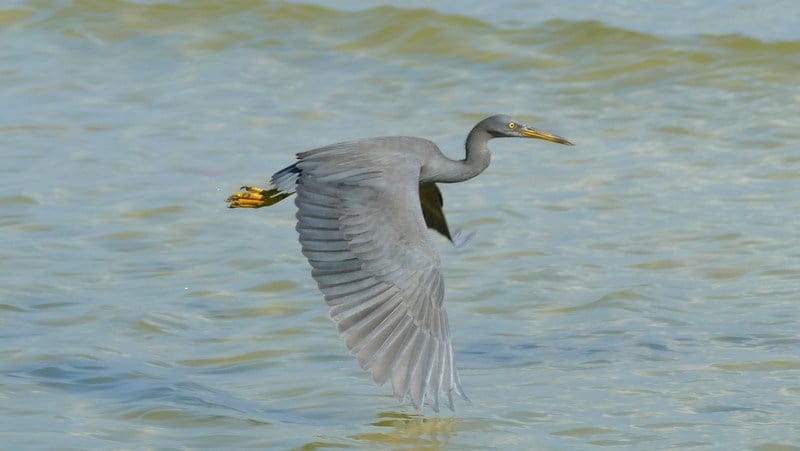
Phuket’s wetlands and beaches are home to various herons, egrets, and storks, all part of the ancient bird family Ardeidae. Fossil records indicate that herons have been present for at least 60 million years, emerging shortly after the extinction of dinosaurs in the Paleogene period. While modern heron species appeared more recently—about 7 million years ago—some, such as the Great Blue Heron, have remained virtually unchanged for over 1.5 million years. These waterbirds continue to thrive in Phuket’s diverse habitats, reflecting their successful adaptation over millions of years.
What’s Next for Wildlife Research in Phuket
The discovery of these ancient lineages among Phuket’s birdlife underscores the island’s role as a living museum of evolutionary history. With continued research and observation, scientists and nature enthusiasts alike can further uncover how Phuket’s current wildlife connects to prehistoric eras. Ongoing conservation efforts will be vital to ensure these ancient species remain a visible part of Phuket’s natural environment for generations to come.
Source: https://news.google.com/rss/articles/CBMiiwFBVV95cUxQME1aWXpLNjFNblZIVFJLWG9fZmFONl9nT1pZT05oUjQteWZFbEhNYzZZTGNaOVV6ZFBDU2hzZlBUZmdJb3ZCTS1hWFg1WGdaOWRTVENXV3czbU1LZ1J0TE9DeE82OGpoNjNxN01OWUVJV3dKRzJFZE9HRWZ3Q1phMm90Sm5Xc1NyYWRZ?oc=5