
How to Pay in Phuket: Cash, Cards, ATMs, Currency Exchange & QR Payments
A practical 2026 guide to using cash, cards, ATMs, currency exchange and Thai QR payments in Phuket, including local exchange options and the fees tourists should avoid.
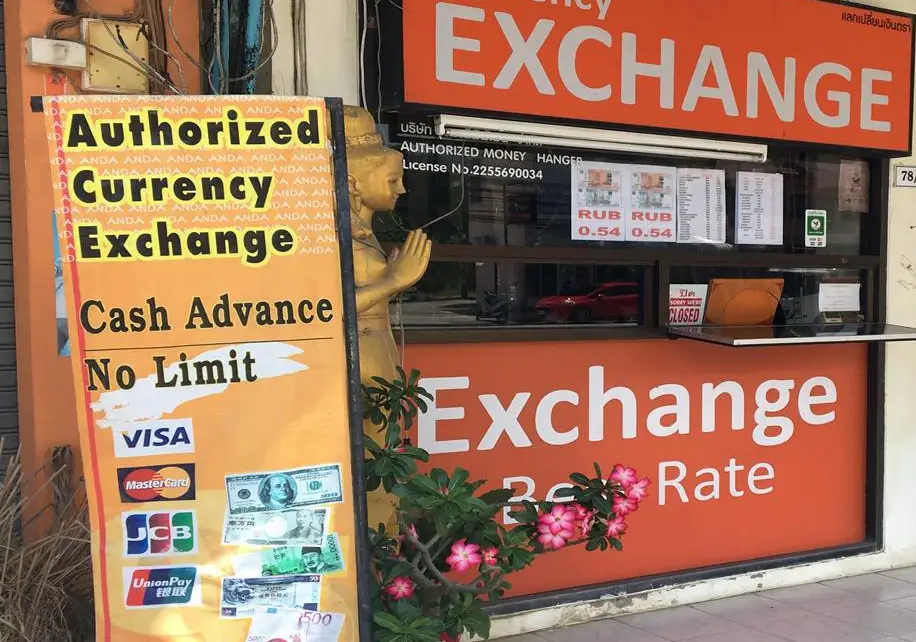
Phuket is neither cash-only nor a place where cards cover everything. For most visitors, the simplest setup is a mix: pay for larger purchases and prebooked expenses by card, keep Thai baht for local spending, and carry two separate cards as backup.
The biggest money mistakes are easy to avoid. Do not buy your entire holiday budget in Thai baht before you leave home or assume every small business accepts foreign cards. Most importantly, when a Thai ATM or card terminal offers to convert a payment or withdrawal into your home currency, choose THB or continue without conversion.
In this guide
- Quick answer
- Cash or card in Phuket?
- ATMs and withdrawal fees
- Currency exchange in Phuket
- PromptPay and QR payments
- Frequently asked questions
Quick answer: the best way to pay in Phuket
For most tourists, there is no single cheapest or most convenient payment method. A practical setup is:
- Pay for hotels, flights and larger online bookings by card when the booking or payment method is trustworthy and your card's foreign-use fees are reasonable.
- Bring some foreign cash if you are comfortable carrying it and exchange it progressively in Phuket instead of converting your entire budget before departure.
- Keep Thai baht for markets, street food, smaller businesses and cash-first situations.
- Travel with at least two cards and keep them in separate places.
- Use ATMs when convenient, but remember that Thai ATM surcharges can be significant.
- At an ATM or card terminal, choose THB and decline the terminal's own currency conversion.
| Situation | Usually the easiest option |
|---|---|
| Hotel or online booking | Card or online payment |
| Mall or larger restaurant | Card, contactless or cash |
| Night market or street food | Cash; Thai QR is increasingly common |
| Need more Thai baht | Currency exchange or ATM, depending on your cards and how much cash you need |
| Want to use Thai QR | A supported cross-border wallet or tourist service such as TAGTHAi Easy Pay |
Before you fly: cash, cards and Thai baht
Do not buy your whole trip budget in Thai baht before travelling
One of the most common first-trip mistakes is ordering a large amount of Thai baht from a bank or travel-money service at home. It is convenient, but usually poor value compared with exchanging a major foreign currency after arrival in Thailand.
If you want peace of mind, arriving with a small amount of THB is reasonable. There is usually little reason to pre-buy enough baht for the whole holiday. Phuket Airport and all major tourist areas have ATMs and currency exchange counters.
Bring cash, but not more than you are comfortable carrying
Bringing foreign cash can be a cost-effective way to obtain baht because a good local exchange office may offer a competitive rate without the flat surcharge charged by Thai ATMs. The trade-off is simple: the more cash you carry, the more you stand to lose if it is misplaced or stolen.
For most visitors, the sensible approach is not “all cash” or “all card”. Bring an amount you are comfortable managing, exchange it in stages, and keep cards available for larger purchases and backup.
For daily and total holiday-budget examples, see our Phuket trip cost guide. Here, the focus is how to pay and access money once you are travelling.
Take two cards and keep them separately
Keep your backup card somewhere different from your main card. They do not need to be from any particular provider; what matters is having another way to pay if one card is lost, blocked, retained by an ATM or temporarily rejected.
Before departure, check your card's overseas-use settings, ATM limits, payment limits and how you will receive security codes or app approvals while abroad. Some card issuers require international use to be enabled before a card will work normally outside its home region.
Cash or card in Phuket?
Cards are easy to use at many hotels, malls, larger restaurants and established businesses in Phuket. Cash still matters for the smaller purchases visitors make throughout the day.
Where cash is still useful in Phuket
Cash is especially useful at Phuket's night markets, street-food stalls, traditional markets and smaller independent businesses. Some sellers accept Thai QR payments, but you still cannot rely on a foreign card at every stall.
This is particularly relevant if you plan to eat at local markets. Our guide to the best night markets in Phuket covers the main places to visit; for payment, the safest assumption is to bring small Thai-baht notes even if some vendors display QR codes.
Cash also remains useful at some massage shops, local restaurants, bars, small tour desks and locally booked activities. Some businesses accept cards but add a card-processing surcharge, so ask before paying if the price difference matters to you.
Many traditional taxis and tuk-tuks still expect cash. Ride-hailing apps are different because payment options depend on the app and your account. See our Phuket Grab, Bolt, inDrive, taxi and tuk-tuk guide for the practical differences between those options.
Where cards are usually easier
Hotels, resorts, major malls, larger restaurants, established attractions and online booking platforms are generally much more card-friendly. Central Phuket and Jungceylon are obvious examples of places where card and contactless payments are far easier to use than at a street market.
If you are spending a day shopping at larger malls, our Phuket shopping guide covers Central Phuket, Jungceylon and the island's main shopping areas.
Do not assume every activity is cash-only
Many locally booked activities accept cash, but card acceptance varies. Some operators take cards with an additional processing charge, while activities booked online may already be paid before you arrive. Ask the operator or booking desk before assuming either method is required.
Even Phuket transport is becoming more mixed
Phuket Smart Bus currently accepts cash, Thai QR payments and contactless cards. Other buses, taxis and local transport services can work differently, so check the operator rather than assuming all transport is cash-only.
ATMs in Phuket: fees, limits and the one rule that matters
Thai ATMs are easy to find in Phuket, but foreign-card withdrawals can be expensive. A single withdrawal can involve several separate costs, so the exchange rate shown in your banking app is only part of the picture.
The costs of an ATM withdrawal
A withdrawal can involve up to four separate costs:
- Thai ATM surcharge: the fee charged by the Thai ATM operator.
- Your bank or card issuer's fee: some cards charge for overseas cash withdrawals.
- Exchange rate: your card network or issuer converts the withdrawal into your account currency.
- Dynamic currency conversion (DCC): an optional extra conversion offered by the ATM. You can usually avoid it by declining the ATM's conversion.
Visa and Mastercard can have different Thai ATM fees
As of August 2026, KBank and Krungsri charge different ATM fees depending on the card network. At these banks, foreign Visa and UnionPay withdrawals cost 250 THB per transaction, while foreign Mastercard withdrawals cost 350 THB. Krungsri also lists JCB at 250 THB.
This matters even if you have a debit card. A debit card can still run over Visa, Mastercard, UnionPay or another international card network.
| Current example at KBank / Krungsri | Thai ATM surcharge |
|---|---|
| Foreign Visa | 250 THB |
| Foreign Mastercard | 350 THB |
| Foreign UnionPay | 250 THB |
| Foreign JCB | 250 THB at Krungsri |
Those figures do not apply to every ATM in Thailand. Fees vary by operator and can change, so check the surcharge shown on the machine before you confirm the withdrawal.
How much can you withdraw from a Thai ATM?
The old advice that every Thai ATM is limited to 20,000 THB per transaction is no longer reliable. Current major-bank limits are higher in some cases: KBank and Krungsri publish maximums of up to 30,000 THB per transaction, while Bangkok Bank publishes up to 25,000 THB on its CDM/ATM machines.
Your own bank can impose a lower daily or per-transaction limit, and an ATM may also have less cash available. Because the Thai surcharge is charged per withdrawal at banks such as KBank and Krungsri, one larger withdrawal can cost less per baht than several small ones. The trade-off is carrying more cash at once.
Always decline the ATM's currency conversion
If a Thai ATM asks whether you want the withdrawal converted into USD, EUR, GBP or your home currency, choose THB or “continue without conversion”.
This is dynamic currency conversion. Accepting it adds another conversion at the rate offered by the ATM or payment provider. Declining it leaves the conversion to your normal card network or issuer instead.
The same rule applies at a shop or hotel terminal if it offers to charge you in your home currency: choose Thai baht (THB).
Currency exchange in Phuket: how to get a good rate
For visitors bringing cash, Phuket has plenty of bank exchange counters and licensed currency exchanges. Rates change throughout the day, so no single office will always have the best exchange rate.
Compare the buy rate, not the wrong side of the board
If you are giving the exchange office foreign cash and receiving Thai baht, look at the buy rate: the rate at which the exchange office buys your foreign currency.
If you are exchanging a substantial amount, compare two or three nearby rate boards. In busy tourist areas the offices are often close enough that this takes only a few minutes. There is usually little point travelling across Phuket for a tiny difference in the rate.
Banknote denomination and condition can matter
Some exchange businesses publish different rates for different banknote denominations, particularly for US dollars. Damaged, heavily marked or unusual notes can also be harder to exchange. If you plan to bring cash specifically for exchange, clean high-denomination notes are generally the easiest to use.
What about SuperRich in Phuket?
SuperRich is well known among Thailand travellers, especially in Bangkok, and many people look for a SuperRich branch in Phuket. Do not assume that a Phuket business using a similar name is an official branch of the well-known Bangkok operators. An official Phuket branch cannot currently be confirmed, so do not choose a booth just because it uses the SuperRich name.
Phuket has many established local exchange businesses, so it makes more sense to compare rates in the area where you are staying than to cross the island looking for one brand.
Where to exchange money in Phuket, area by area
As of August 2026, the exchange offices below are operating and useful places to compare rates. Rates move constantly, so check the live board for your own currency before exchanging a large amount.
Rawai / Nai Harn
Money Shop Exchange Rawai is an established option in Rawai. Rawai and Nai Harn have several other exchange offices nearby, so compare the displayed rate if you are changing a significant amount.
Kata / Karon
In Kata, Money Shop Exchange Kata and YES Exchange Kata are useful places to compare. Karon also has plenty of local exchange booths, and the sensible approach there is simply to compare a couple of nearby boards rather than chase one particular office.
Patong
Lion Currency Exchange Patong operates inside Jungceylon and is a useful place to compare rates. YES Exchange Patong is another established option nearby.
Jungceylon is particularly convenient because several exchange services and major Thai banks are concentrated in the same complex. If you are already in Patong, compare a couple of boards there instead of travelling across Phuket for a marginal difference.
Central Phuket / Phuket Town
Central Phuket is one of the easiest places on the island to compare several exchange counters in one visit. Lion Currency Exchange @ Central Phuket and Value Plus Currency Exchange at Central Phuket are both established options, with other competitors in the same shopping complex.
If you are staying in Phuket Old Town and do not want to travel to Central, YES Exchange Old Town is a convenient local option.
Chalong
Money Shop Chalong Lotus is one established option in Chalong. Value Plus also operates at HomePro Chalong, giving visitors another nearby rate to compare.
Bang Tao / Surin
Money Shop Exchange Bang Tao is one established option in the north-western tourist area. Value Plus also lists branches around Porto de Phuket and Laguna, so visitors staying in Bang Tao or Laguna do not need to travel south simply to exchange money.
Should you exchange money at Phuket Airport?
Phuket International Airport has official Siam Commercial Bank (SCB) currency-exchange counters, including current 24-hour counters in the international arrival/transit area. If you arrive without any baht, exchanging enough for your immediate needs is straightforward.
There is usually no reason to exchange your entire holiday budget at the airport. Once you reach Patong, Kata, Rawai, Central Phuket or another main tourist area, you will have more exchange offices to compare.
Another option in the airport area, Airport Exchange, has recent reviews describing competitive rates compared with terminal counters. It is worth checking, but there is no guarantee that it will always have the best airport-area rate.
Can tourists use PromptPay or Thai QR in Phuket?
Yes, but not every tourist can simply open a home banking app and scan any Thai QR code. Thai QR payments have become much easier for visitors in 2026, and Phuket has several tourist signup points for services designed to bridge that gap.
TAGTHAi Easy Pay: a QR option designed for tourists
TAGTHAi Easy Pay is a tourist e-wallet from KBank. Foreign tourists aged 20 or over can register in person at a participating KBank foreign-exchange booth with a passport, then use the wallet for Thai QR payments.
TAGTHAi now works with standard merchant QR codes and many personal PromptPay QR codes used by smaller sellers. Personal QR payments currently have a lower limit of 1,700 THB per transaction.
TAGTHAi currently lists multiple signup points in Phuket, including locations in Patong, Kata and Central Festival Phuket, with two points at Jungceylon. Check the official TAGTHAi Phuket location list before going because participating booths can change.
You can also link an eligible foreign debit or credit card, subject to 3-D Secure and issuer approval. KBank cardless ATM withdrawal is available, currently up to 10,000 THB per transaction and per month. KBank's published normal withdrawal fee is 20 THB, with a promotional waiver through 31 December 2026. Do not assume the waiver will continue after that date.
TAGTHAi can be useful if you want to use Thai QR payments without opening a Thai bank account. It is not essential for every short trip, and you should still keep a card and some cash as backup.
Cross-border QR works for some visitors
Thailand now has cross-border QR links with participating apps and wallets from several Asian markets. Current Tourism Authority of Thailand information lists support for participating users from China, Singapore, Malaysia, Indonesia, Viet Nam, South Korea, Lao PDR, Cambodia and Hong Kong.
The important word is participating. A bank or wallet from one of those markets must actually support the Thai cross-border connection. Do not assume every foreign banking app can scan every PromptPay code.
What about TrueMoney?
TrueMoney allows foreigners to register, but full personal PromptPay functionality requires advanced identity verification and supporting documents under current terms. For a typical short-stay visitor, TAGTHAi is the simpler option built specifically around tourist use.
Other ways to reduce cash-withdrawal costs
If you are trying to minimise every fee, there are alternatives to repeatedly withdrawing small amounts from Thai ATMs. They are more complicated, so most tourists do not need them.
Withdraw cash at a bank counter
Over-the-counter card withdrawal exists, but it is not a universal fee-free loophole. Krungsri currently lists a 200 THB counter withdrawal fee for an international Visa card, compared with its 250 THB Visa ATM surcharge.
Other banks and card networks can have different rules, and your own card issuer may treat the transaction as a cash advance or charge its own fee. Before authorising a large counter withdrawal, ask the bank what fee, exchange rate, supported card network and maximum amount will apply.
Send money to yourself for cash pickup
Services such as Remitly, WorldRemit and Western Union offer cash pickup in Thailand from some countries, and travellers can use them to send money to themselves for collection.
This can sometimes work out cheaper than paying a large flat Thai ATM surcharge, especially for a larger transfer. It is not automatically cheaper. Compare the final amount of THB you will receive after the transfer fee, provider exchange rate and any card-funding charge.
Do not assume that paying for the transfer with Wise, Revolut or another travel card will automatically make it cheaper. The result depends on your country, provider, funding method and the amount being sent.
Payment safety and backup planning
- Keep two cards in separate places rather than in the same wallet.
- Carry only the cash you expect to need for the day when practical.
- Do not keep your entire holiday cash budget in one place.
- Use established bank ATMs or clearly identified machines and read the on-screen surcharge before confirming.
- Keep access to your banking app, authentication method and the option to freeze a card quickly if needed.
- Check that you have taken both your cash and your card before walking away from an ATM.
- If a card is lost, freeze or block it through the issuer as soon as possible.
Frequently asked questions
Should I exchange Thai baht before travelling to Phuket?
Buying a large amount of THB before departure is usually poorer value than bringing a major foreign currency and exchanging it in Thailand. Buying a small amount before travel can be convenient if you want baht in your pocket on arrival, but there is usually no need to pre-buy your full holiday budget.
How much cash should I carry in Phuket?
There is no single useful daily figure because spending varies too much. Carry enough for the cash-first things you expect to do that day, plus a reasonable backup. Markets, street food, massages, small local businesses and some transport are the main reasons to keep baht available. For total holiday-budget examples, use our Phuket cost guide.
Should I choose THB or my home currency at a Thai ATM?
Choose THB. If the ATM offers to convert the withdrawal into your home currency, decline that conversion or select “continue without conversion”. The same rule applies when a card terminal in a shop or hotel offers to charge you in your home currency.
Is Wise good for Thailand?
Wise can be useful for card spending and cash withdrawals in Thailand, but its ATM allowances and fees depend on where the card was issued. Thai ATM surcharges are separate. Treat Wise as one possible travel card, not a universal way to avoid Thai ATM fees.
Is Revolut good for Thailand?
Revolut is widely used by travellers in Thailand, but withdrawal limits and fees depend on the plan and issuing country. Thai ATM operator fees can still apply. Whether Revolut or Wise is cheaper depends on your own plan, withdrawal pattern and card terms.
Is Charles Schwab good for Thailand?
For eligible US customers, Charles Schwab Investor Checking is unusually useful because it currently reimburses eligible ATM fees worldwide and does not charge a foreign transaction fee on its debit card. Dynamic currency conversion is not a reimbursable ATM fee, so Schwab users should still choose THB and decline the ATM's conversion.
Which other travel cards are worth checking?
The answer depends on where you live. Current examples include Wealthsimple in Canada, Starling and Monzo in the UK, N26 in eligible European markets and HSBC Everyday Global in Australia. The important features are not the brand name: check foreign-transaction fees, your own bank's ATM fee, whether third-party ATM surcharges are reimbursed, withdrawal limits and whether the card can be frozen instantly in an app.
Can I use Apple Pay in Phuket?
Apple does not currently list Thailand as an Apple Pay market for local bank cards, but a foreign card already added to Apple Pay may work at compatible contactless terminals in Phuket. Do not rely on Apple Pay as your only payment method.
Can I use Google Wallet or Google Pay in Phuket?
Google Wallet has official support in Thailand, subject to your card issuer and the merchant having a compatible contactless terminal. As with Apple Pay, acceptance is not universal, so keep another payment method available.
Can Chinese visitors use Alipay or WeChat Pay in Phuket?
Thailand's current cross-border QR programme includes payment partners such as Alipay and WeChat Pay, and Chinese visitors can use supported wallet connections at participating Thai merchants. Both the wallet and the merchant need to support the connection, so do not assume every PromptPay QR code will work.
Can tourists use PromptPay without a Thai bank account?
Yes, in some cases. TAGTHAi Easy Pay gives foreign tourists a route to Thai QR payments without opening a normal Thai bank account, and some visitors can use participating cross-border QR apps from their home market. The exact options depend on the wallet, country and QR type.
Is cash pickup cheaper than using a Thai ATM?
Sometimes. A self-transfer through Remitly, WorldRemit, Western Union or another provider can beat a large flat ATM fee on some routes and amounts. It can also be worse once the transfer fee and exchange-rate spread are included. Compare the final THB received for the same amount of your home currency.
Is there an official SuperRich in Phuket?
Do not assume there is an official Phuket branch of the well-known Bangkok SuperRich operators simply because a local business uses a similar name. An official Phuket branch cannot currently be confirmed. Phuket has many established local exchange offices, so compare live buy rates in the area where you are staying.