
Phuket firms expand cage-free egg production under sustainable food initiative
Katalist and Thaweebhan Phuket are expanding cage-free egg production in support of animal welfare, local food security and cleaner energy in Phuket.
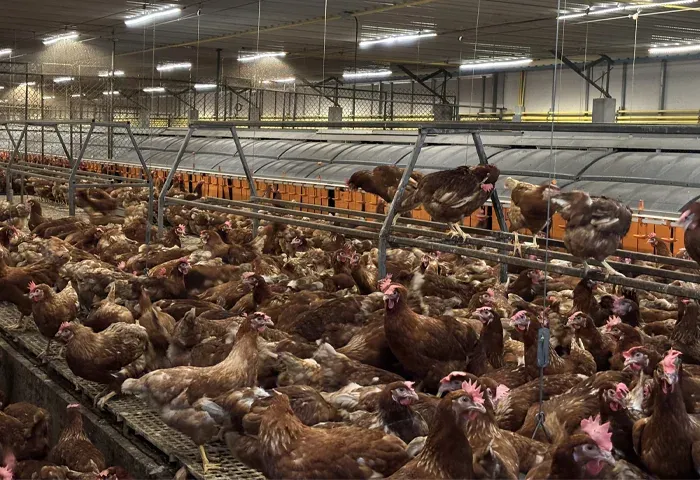
Katalist Co., Ltd. and Thaweebhan Phuket Co., Ltd. are expanding cage-free egg production in Phuket as part of an initiative promoting animal welfare, local food security and sustainable energy.
The companies are developing the system under the Good Life Framework for Hens and in line with the Happy Egg Connect policy and the Tourism Authority of Thailand’s value-over-volume tourism approach. The provincial livestock office and the veterinary faculties of Kasetsart University and Chulalongkorn University are supporting the work.
Katalist founder and executive director Dr Watchara Phumphadit said the company, established in 2020, works with partners in more than 20 provinces and is promoting sustainable food through cooperation among government agencies, businesses, farms, academics and other stakeholders.
The framework assesses hens’ quality of life across five areas: comfort, pleasure, confidence, interest and healthy life. Cage-free production requires more than removing cages, Dr Watchara said, because farms must manage temperature, lighting, cleanliness and flock behaviour to reduce aggression and allow hens to perch and dust-bathe naturally.
Thaweebhan Phuket managing director Naphatthorn Phetchot said the company was developing its farm around sustainability and Phuket’s food security. Because the province relies heavily on food brought in from outside, producing eggs closer to consumers could help strengthen local supply, he said.
The company sold 49,612,980 eggs in 2025, including 30,914,550 eggs from its own farm. The remainder came from seven partner farms: four in the southern provinces of Phang Nga, Trang and Surat Thani, and three in central Thailand’s Ang Thong and Suphan Buri provinces.
The farm currently has 133,000 laying hens, including 12,500 in a cage-free system, with output of about 120,000 eggs a day. It has set a 2026 target of 168,000 hens, including 25,000 cage-free birds, and daily production of 159,600 eggs.
The cage-free houses use slatted flooring and perches. Perches are positioned at least 20 centimetres from the walls and at least 30 centimetres apart, with 15 centimetres of perch space allocated per bird, according to the company’s animal-welfare standards.
Thaweebhan Phuket also plans to install a 100-kilowatt solar system in 2026 on the roof of an enclosed, evaporative-cooling house. The company said the system will supply daytime electricity directly to ventilation fans and may reduce house temperatures by 3-5 degrees Celsius. It also plans to develop carbon credits in the following year.
The company advised consumers to check a farm’s production source and certification because there is not yet a dedicated government label for cage-free eggs. It said cage-free and caged systems must be kept separate and that eggs packed at the same facility should have traceability records showing their farm of origin.