UPDATE: Phuket Vegetarian Festival 2026 to run from 9 to 18 October
Phuket’s 2026 Vegetarian Festival has an official event window from 9 to 18 October, with 9 October as a cleansing day and the main nine-day festival from 10 to 18 October.
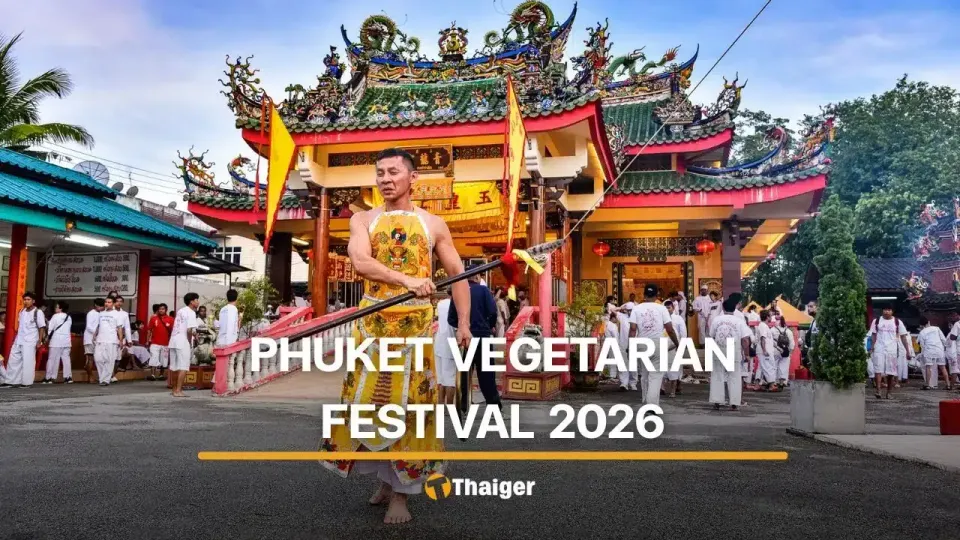
Phuket’s 2026 Vegetarian Festival will involve more than 40 shrines across the island, with the biggest events centred on Phuket Town’s old quarter.
Bangkok Biznews reported on 5 October that the Thai government expects the overall event to run from 9 to 18 October, with more than B1.4 billion in economic circulation. The 9 October date is the cleansing day, while the main nine-day festival runs from 10 to 18 October.
Shrines across Phuket have begun cleaning and preparing their premises ahead of the festival, The Phuket News reported on 5 October.
The Tourism Authority of Thailand expects 140,000 to 150,000 Thai and international visitors during the nine-day festival and estimates that it will generate more than B1.4 billion for Phuket’s economy.
A separate later report by Travel and Tour World associated the festival with a B1.3 billion tourism boost, focusing on hotel stays and local gains. The available reporting does not establish whether the B1.3 billion figure uses the same metric as the TAT and government forecasts, so all of these remain separate attributed estimates rather than a confirmed correction of one another.
The festival is also part of Phuket’s Chinese-Thai religious and community heritage. TAT’s earlier official coverage places it within that spiritual tradition, while Travel and Tour World noted that its value cannot be assessed solely through hotel bookings or retail spending.
Known in Thai as Kin Jay and locally as Jia Chai, the festival honours the Nine Emperor Gods. Devotees traditionally wear white, avoid meat, alcohol and sex, and observe a period of physical and spiritual purification. Yellow flags mark food stalls serving vegetarian food.
The festival follows the Chinese lunar calendar, running from the first to the ninth day of the ninth lunar month, so its dates change each year.
Processions and rituals
Morning processions are the centrepiece of the festival. They leave Chinese shrines across Phuket, usually between 6am and 8am, with the most prominent events in Phuket Town. The Thaiger’s festival guide identifies 14 to 18 October as the best period for visitors to watch the processions.
The processions feature mah song, or ‘entranced horses’ — devotees believed to be possessed by the gods. Some walk with their cheeks pierced by skewers, blades or other objects. Believers say the gods protect them from feeling pain.
Residents throw strings of firecrackers at shrine carriers as they pass, in a ritual intended to drive away bad luck. Visitors should expect loud explosions and heavy smoke along the routes.
Several shrines hold fire-walking ceremonies at about 8pm. Later in the festival, devotees cross purification bridges and some shrines stage climbs over ladders fitted with blades.
The final-night procession carries the gods through Phuket Town to Saphan Hin, at the southern edge of the city. Firecrackers and fireworks mark the send-off.
Where to watch
Phuket Town’s old quarter, particularly the area around Jui Tui Shrine on Ranong Road, is the main viewing area. More than 40 shrines participate across the island, but procession routes and start times can change. Visitors are advised to check the official programme from TAT Phuket before travelling.
The festival is free to watch, although visitors must pay for food and transport. It is a religious event as well as a public spectacle, and visitors are not expected to follow devotees’ full observances.
The local tradition is traced to 1825 in Kathu, then a tin-mining town with a large Chinese population. According to the festival’s traditional account, a travelling Chinese opera troupe became seriously ill while performing there, recovered after observing a strict vegetarian diet and praying to the Nine Emperor Gods, and prompted the community to repeat the ritual annually.