Rawai sea gypsy community asks Phuket governor to probe private seawall construction
Residents of the Rawai sea gypsy community in Phuket have petitioned the provincial governor to investigate private coastal barrier construction they say could affect fishing access and cultural practices.
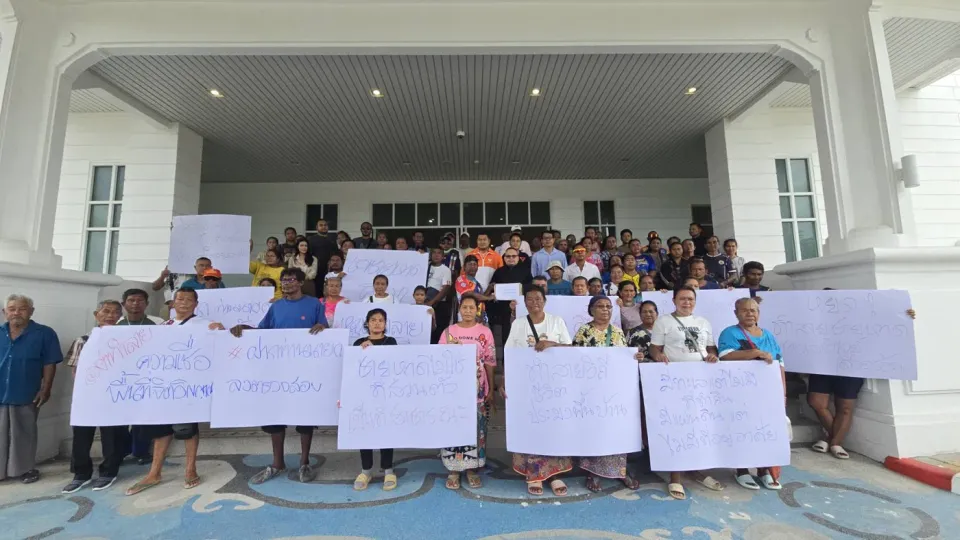
Members of the Rawai sea gypsy community in Phuket submitted a petition to the provincial governor on Tuesday, asking authorities to investigate and urgently address private-sector construction of a coastal barrier that they say could disrupt their traditional fishing way of life.
The petition was filed by residents of the Chao Thai Mai community in Rawai subdistrict. Monchai Saelao, director of the Phuket Damrongtham Center, received the complaint on behalf of the governor, according to the report.
Residents said the coastal area in question has long been used by local small-scale fishermen for their livelihoods, including launching and landing boats and traveling by sea. They said the site also has cultural importance to the community and is used for important rituals held every year.
The community told authorities it fears the construction could affect traditional access routes, disrupt fishing activities and create obstacles to preserving cultural ceremonies that have been observed for generations.
In their complaint, residents raised several points for official review. They questioned whether the land had long been used jointly by the public without previous obstruction, whether the route used by villagers should be considered public property under Section 1304 of the Civil and Commercial Code because it has been used by the public for decades, and whether the boundary structure being built is so close to the beach that it is affected by waves and seawater.
They also questioned whether, if the structure functions as a seawall because it interacts with wave action, the project should be required to prepare an environmental impact assessment, or EIA.
The report said the petition reflects not only a land-use dispute but also an effort by the community to protect its traditional way of life, identity and rights before any development causes impacts that may be difficult to reverse.