Thai FDA warns Phuket consumers after B52 million unregistered peptide seizure
Thai authorities seized unregistered peptide injections and equipment worth more than B52 million in Nonthaburi after a parent raised concerns about an online seller.
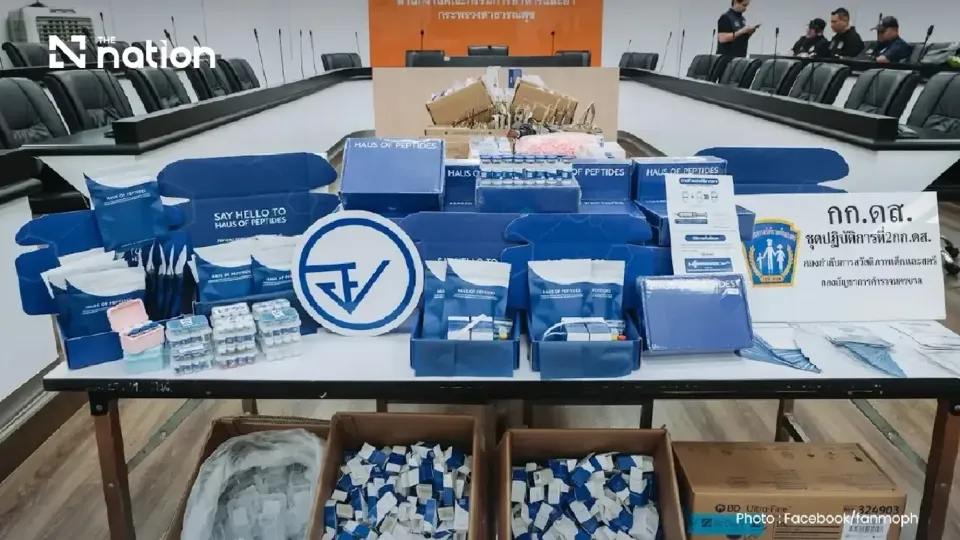
Thai authorities have warned consumers and beauty-treatment providers, including those in Phuket, about unregistered peptide injections after seizing products and equipment worth more than B52 million in Nonthaburi on 11 September 2026.
The Food and Drug Administration (FDA) and the Metropolitan Police Bureau said the products were sold online under the name Haus of peptide and advertised for weight loss. Police began investigating after a parent reported that their daughter had injected one of the products and might be at risk.
Investigators traced the sales to a social-media account whose Thai name translates as “Hom reviews only quality products”. The injections had no drug registration numbers, police said.
A search of a house in Sao Thong Hin subdistrict, Bang Yai district, found products and equipment linked to an operation that police alleged had been running for about a year. The sellers reportedly rented the property and employed migrant workers to pack orders for private-courier delivery. Police said the operation dispatched an average of 100 boxes per day at B2,900 each.
Thai health officials said the contents and manufacturing standards of unregistered injections could not be verified. FDA secretary-general Supattra Boonserm warned that buyers could receive counterfeit products, medicines without the claimed active ingredient or substances made under unknown conditions.
Public Health Permanent Secretary Dr Somrerk Jeungsmarn said non-sterile injections could cause bloodstream infections that might be fatal. He also warned that injectable glucagon-like peptide-1 (GLP-1) medicines require medical assessment and supervision, citing possible side effects including nausea, diarrhoea, vomiting, constipation, abdominal pain and bloating. More serious complications can include acute pancreatitis and acute kidney failure, he said.
Police are pursuing two alleged offences under Thailand’s Drug Act 1967: selling modern medicines without a licence, which carries a possible sentence of up to five years in prison and a fine of up to B10,000; and selling unregistered medicines, punishable by up to three years in prison, a fine of up to B5,000, or both.
The report also noted that the US Food and Drug Administration said in January 2026 that its review found no increased risk of suicidal thoughts or behaviour with GLP-1 receptor agonists. US prescribing information for tirzepatide states that thyroid C-cell tumours occurred in rats, while the risk to humans remains unknown.
The September seizure followed an earlier FDA and Central Investigation Bureau crackdown announced in February. Authorities reported seizing more than 119,000 unregistered products worth about B17.94 million in Bangkok, Nakhon Pathom and Ratchaburi.