
Air India expands pilot testing after Phuket flight incident
Air India has expanded drug screening for pilots after a Phuket-to-Delhi flight lost about 300 feet of altitude and injured 17 people. Two more pilots reportedly returned non-negative initial test results.
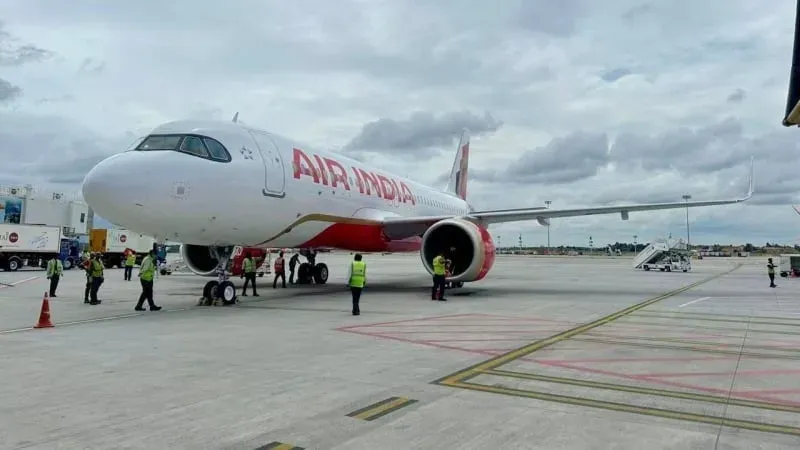
Air India has expanded drug screening for its pilots after flight AI2379, travelling from Phuket to Delhi, lost about 300 feet of altitude and injured 17 people on 4 August 2026.
The airline said in a clarification that the expanded testing programme was being conducted as part of its commitment to safety and professionalism. It urged media and other stakeholders to avoid speculation while the process and related investigations continue.
Two more Air India pilots have reportedly returned “non-negative” results in preliminary drug tests conducted after the incident, according to people aware of the development. Confirmatory results are pending, and the pilots have been removed from flying duties until the final reports are available.
A preliminary non-negative result does not establish that a pilot used a prohibited substance. Confirmatory testing is required because initial results can be affected by legitimate medication or other substances.
Nearly 400 pilots have undergone screening under Air India’s one-time mandatory testing programme for cockpit crew at Air India and Air India Express. The two airlines have more than 5,000 pilots. Air India ordered all pilots and cabin crew to undergo testing for psychoactive substances on 13 August 2026, exceeding the existing requirements of India’s civil aviation regulator.
The captain of the Phuket-to-Delhi flight had separately come under scrutiny after returning a non-negative preliminary test result. However, the initial assessment of the aircraft’s flight data recorders did not indicate that human action caused the sudden altitude loss.
The aircraft, an Airbus A320neo, was initially reported to have encountered turbulence. A preliminary flight-data assessment later found that hydraulic control was temporarily lost across all three of the aircraft’s independent hydraulic systems, leaving key flight controls unresponsive for several seconds.
The assessment found that pressure dropped across the Green, Blue and Yellow hydraulic systems within about one second. The loss temporarily affected the elevators and ailerons. The ailerons moved in the same direction, generating additional lift and causing the aircraft’s nose to pitch sharply upwards without pilot input. The autopilot disengaged, after which the first officer took manual control and pushed the nose down.
The resulting rapid downward acceleration threw passengers and cabin crew upwards. Thirteen passengers and four crew members were injured. The aircraft landed safely at Delhi’s Indira Gandhi International Airport, where those injured were taken to hospital for medical evaluation.
Hydraulic pressure returned across all three systems about five seconds later, allowing the flight-control computers to reconnect and the aircraft to respond to pilot commands. Investigators have not yet established whether the hydraulic systems malfunctioned or whether a faulty wire or sensor generated a false warning.
The incident has been classified as serious and is being investigated by India’s Aircraft Accident Investigation Bureau, with Airbus assisting. Airbus has asked Air India to inspect one of the hydraulic pressure switches to determine whether it was faulty and transmitted an incorrect signal.