Phuket MP and stakeholders call for greater local powers
Proposals include more control over budgets, personnel, permits and infrastructure, along with a possible Citizens’ Council and long-term self-governance pilot.
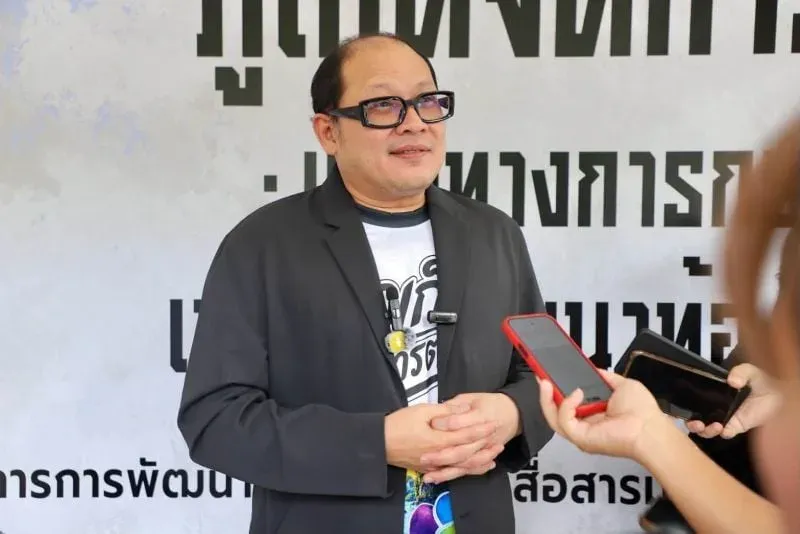
A Phuket MP and other participants at a seminar on Saturday, 8 August, called for greater local authority over budgets, personnel, infrastructure, permits and public-land management as part of a possible self-governance model for the province.
The seminar, titled “Phuket Self-Governance: Approaches to Decentralization for Sustainable Local Development”, was held at Patong Bay Hill Hotel and organised by the House Committee on Political Development, Mass Media and Public Participation. The committee was chaired by Pukkamon Nunarnan, with representatives of government agencies, the private sector, civil society, MPs and local residents taking part.
Phuket Constituency 2 MP Chalermpong Saengdee said the province continued to face problems involving public-land encroachment, influential figures, nominee businesses and alleged mafia groups. He said existing laws and administrative structures limited the province’s ability to address those issues.
Mr Chalermpong called for decentralisation in four areas: power, budget, personnel and responsibility. He said Phuket should have greater authority over matters directly affecting the province, including public-land use, permits for forest areas, infrastructure development, roads and public utilities.
He also called for sufficient personnel to be assigned to Phuket and for agencies involved in infrastructure projects to coordinate more effectively to reduce bureaucratic delays. He proposed creating a “Citizens’ Council” to provide checks and balances on provincial administrators and monitor budget spending.
Mr Chalermpong said he was prepared to push legislation on “Self-Governing Provinces” or a “Phuket Metropolitan Area” through Parliament. He stressed, however, that public opinion should be considered before any governance model was adopted.
Seminar speaker Preechawude “Prab” Keesin said Phuket’s status as an international tourist city required an administrative structure capable of responding quickly to local needs. He proposed giving local authorities greater power to make decisions and issue permits within the law, including for tourism, entertainment and spa businesses, as well as natural-resource and forest management.
Under his proposal, the central government would retain responsibility for national security, the justice system, foreign affairs and national financial and tax systems. He also called for a greater share of taxes and income generated in Phuket to be returned to local authorities for public utilities and provincial development.
Mr Preechawude said better coordination was needed on public spaces, parking, traffic and public transport, including possible mass-transit systems such as buses and trams. He also proposed integrating CCTV and artificial intelligence systems operated by different agencies to improve security and urban management.
Rather than adopting one system nationwide, he said each province should be able to develop a model suited to its circumstances. For Phuket, he suggested a pilot lasting about 30 to 50 years, with measurable indicators covering the economy, safety, public-service delivery, education, public health, law enforcement and natural-resource management.
Ms Pukkamon said a “Phuket Model” had previously been pursued under the government of Gen Prayut Chan-o-cha but had not been sustained. She said the current effort should address structural problems and establish mechanisms that could continue beyond the term of any one government.
The committee said it would gather views from residents, businesses, civil society and government agencies rather than impose a model from Bangkok. It will compile the seminar’s recommendations into a report for the government and relevant agencies and may consider drafting legislation to support decentralisation and self-governance in Phuket.
An afternoon session, “The People’s Voices Shape Phuket’s Future”, allowed participants to identify and prioritise problems and propose solutions. The committee said the feedback would be incorporated into policy and possible legal proposals, with public participation and local circumstances guiding any future model.