
Khai Islands Phuket: Khai Nok, Khai Nai, Tours, Prices and What to Expect
Compare Khai Nai, Khai Nui and Khai Nok, half-day tours, prices, departure piers, snorkeling, crowds, facilities and practical tips from Phuket.
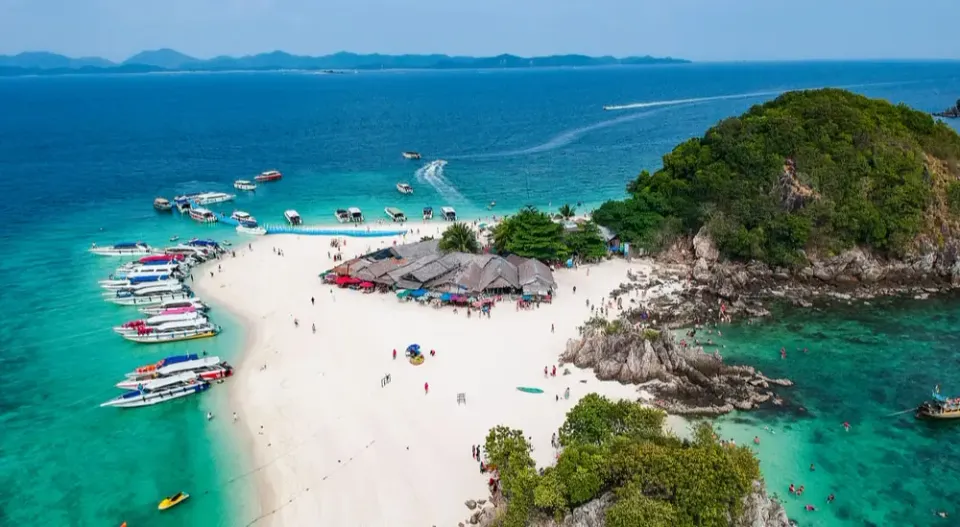
The Khai Islands are worth considering if you want one of the shortest and easiest organised island trips from Phuket. The crossing is usually brief, the water can be strikingly clear, and the standard tour fits into half a day. They are much less suitable if you expect a quiet, undeveloped island, extensive reefs, or a full day of independent exploration.
The group consists of Khai Nai, Khai Nui and Khai Nok, but they do not provide three equivalent beach experiences. Khai Nai and Khai Nok are the usual landing and beach stops. Khai Nui is primarily an offshore snorkeling location, with visitors normally entering the water from the boat when sea conditions allow.
The most important choice is therefore not simply which Khai island is best. It is whether to book a dedicated Khai half-day tour, accept Khai as a short final stop on a Phi Phi itinerary, or arrange a private boat. Departure pier, group size, time allocated at each beach, hotel-transfer supplements and crowd timing can change the experience substantially.
Khai Islands at a glance
| Best for | A short organised island trip, shallow-water swimming, first-time snorkeling and travellers who dislike long crossings |
|---|---|
| Main drawback | Heavy crowding, many speedboats, limited beach space and a strongly commercial atmosphere |
| Islands included | Khai Nai, Khai Nui and Khai Nok |
| Actual beach stops | Khai Nai and Khai Nok |
| Snorkeling-only stop | Khai Nui, normally from the boat and subject to sea conditions |
| Main departure areas | Royal Phuket Marina, Phuket Boat Lagoon, operator piers around Rassada and, for some trips, Ao Po |
| Typical crossing time | About 15–25 minutes by speedboat from Phuket's east coast, depending on the actual pier and conditions |
| Public ferry | No regular public passenger ferry identified |
| Standard visit duration | Half day |
| Typical shared-tour price | About THB 950–1,200 per adult in the 2025–2026 listings reviewed, before possible transfer supplements |
| Swimming | Accessible in suitable conditions, but boat and jet-ski traffic can reduce usable space |
| Snorkeling | Easy for beginners when visibility is good, but variable and not consistently pristine |
| Facilities | Basic bars, drinks, snacks, chairs and toilets on Khai Nai and Khai Nok; none confirmed on Khai Nui |
| Overnight stay | No tourist accommodation recommended |
| Best months | Generally November to April for more reliable sea conditions, while daily weather still matters |
Are the Khai Islands worth visiting?
Yes, for the right type of visitor and the right expectations. The Khai Islands work best as a compact marine outing rather than a major island destination. Their strongest advantages are convenience, short travel time, clear shallow water in favourable conditions and a schedule that does not consume an entire day.
A traveller staying in Phuket for only a few days may appreciate being able to leave in the morning and return around lunchtime, or depart after lunch and be back before dinner. Families with children who are comfortable on speedboats may also prefer the short crossing to the longer journeys required for Racha or Phi Phi.
The weaknesses are equally important. These are tiny islands that receive large numbers of visitors. When several boats arrive together, the beaches can feel saturated. Chairs, bars, photographers, water-sports sellers, jet skis and speedboats occupy a substantial part of the experience. Visitors repeatedly describe a major difference between the natural appearance of the islands and the reality of a busy organised-tour stop.
You should probably choose the Khai Islands if you want:
- a short half-day trip rather than a full-day expedition;
- a brief speedboat crossing from Phuket's east coast;
- shallow water and fish visible near shore in good conditions;
- an easy first island excursion;
- photogenic water and white sand without travelling as far as Phi Phi or Racha.
You should probably choose another destination if you want:
- a quiet or undeveloped beach;
- long uninterrupted swimming away from boats;
- serious snorkeling or healthy reef conditions as the main purpose of the trip;
- independent transport and flexible return times;
- a full-day island experience with hiking, villages, restaurants or overnight accommodation.
Khai Nai, Khai Nui and Khai Nok explained
Khai Nai
Khai Nai is one of the two main beach islands. Dedicated Khai tours commonly use it as the first landing point, although itineraries vary.
The island has a compact sandy shoreline, shallow water, simple bars and paid seating. Fish are often visible close to the beach when the water is clear. This makes the island approachable for beginners who are not looking for deep-water snorkeling.
Khai Nai is also known for its cats. Recent reviews describe numerous friendly cats around the beach and bars, although their condition is not described consistently. Some visitors report that the animals appear regularly fed, while others describe a few as looking worn. Treat the cats as part of the island environment rather than an attraction that visitors should automatically feed.
The major weakness is scale. Khai Nai is extremely small compared with the number of boats it can receive. A pleasant beach can change rapidly once several tour groups arrive. Reviews mention limited swimming room, sellers approaching visitors shortly after landing, and pressure to rent chairs or order drinks.
There are also practical hazards. Some visitors report rocks, coral fragments, sea urchins, glass or plastic in parts of the water. These conditions are not necessarily present every day or across the entire beach, but they justify using the designated swimming zone, watching where you step and asking the guide about current conditions.
Khai Nui
Khai Nui is not a third conventional beach stop. It is primarily a rocky offshore snorkeling location. Visitors generally enter the sea directly from the boat rather than landing for a beach stay.
This is the most misunderstood part of many “three Khai Islands” itineraries. The wording can imply three beaches, while the actual experience is normally two beach landings plus one offshore snorkeling stop.
Khai Nui is also the most weather-dependent part of the itinerary. Operators may skip the stop when wind, waves, current or visibility make snorkeling unsuitable. In that case, additional time may be allocated to Khai Nai or Khai Nok. This should be understood as a normal safety adjustment rather than automatically treated as a failed tour.
Before booking, check whether the itinerary explicitly includes snorkeling at Khai Nui or merely lists the island among the route highlights. Some commercial descriptions are vague, and sea conditions can still change the plan on the day.
Khai Nok
Khai Nok is the other major beach stop and is frequently used as the final island on dedicated Khai tours. It is also commonly added to Phi Phi day trips before the boat returns to Phuket.
Khai Nok offers white sand, shallow turquoise water, bars, chairs and water activities. In favourable conditions, it can look exactly like the compact tropical stop shown in tour photographs. Several positive reviews mention clear water, visible fish and a pleasant one-hour visit.
The same island also generates some of the strongest complaints. Visitors repeatedly mention boats occupying much of the shoreline, loud jet skis, inflated or unclear prices, poor swimming space and a feeling that the stop exists primarily to sell drinks, seats and activities.
One recent review advised swimming on the side opposite the main boat landing, where the beach was described as more attractive and the water less congested. This is useful situational advice, not a guaranteed rule. Boat positions and designated swimming areas can change, so follow the guide's instructions on arrival.
Which Khai Island is best?
There is no clear universal winner because each island serves a different role.
| Island | Best for | Main limitation |
|---|---|---|
| Khai Nai | Shallow beach time, cats, simple bars and a compact first stop | Very small, commercial and quickly crowded |
| Khai Nui | Boat-based snorkeling when the sea is suitable | No standard beach landing and may be skipped |
| Khai Nok | Beach, swimming, photos and a final relaxation stop | Heavy boat traffic, paid facilities and frequent crowding |
Khai Nai and Khai Nok are broadly comparable as beach stops. The better one on a particular day may depend more on crowd timing, wind direction, boat positioning and water conditions than on a permanent difference in quality.
Khai Nui is the best choice only in a narrower sense: it is the dedicated snorkeling component when conditions permit. It should not be compared directly with the other two as a place to relax on the sand.
How to get to the Khai Islands from Phuket
There is no regular public ferry or standard independent passenger service to the Khai Islands. Most visitors arrive on an organised speedboat or a private charter.
The trip is usually sold from Phuket's east coast because the islands lie east of the main island. A practical crossing time is approximately 15–25 minutes, but the actual duration depends on the departure pier, the speedboat and sea conditions.
Royal Phuket Marina
Royal Phuket Marina is a major departure point for speedboat tours and private charters. It is modern and convenient for travellers staying around Phuket Town, Kathu and central Phuket, but it is not the universal departure point for Khai tours.
Phuket Boat Lagoon
Phuket Boat Lagoon and nearby operator piers are also used for Khai tours and private boats. Some booking pages use the name of a tour company rather than the marina itself, so confirm the exact meeting point.
Rassada and Asia Marina area
Some operators depart from private piers or marina facilities in the broader Rassada area. These should not be confused with the public Phi Phi ferry operation at Rassada Pier. A Khai speedboat product may use a nearby operator base rather than the main ferry terminal.
Ao Po and other east-coast piers
Ao Po Pier is used by some operators and private charters, particularly for routes in Phang Nga Bay and the eastern islands. It is farther north than Royal Phuket Marina and Boat Lagoon, so the road transfer may be longer for visitors staying in southern Phuket.
Hotel pickup and transfer supplements
A headline tour price does not always include transfer from every part of Phuket. Central pickup zones may be included, while Rawai, Nai Harn, Cape Panwa, Mai Khao, Nai Yang or other distant areas may require a supplement or private transfer.
Compare the final price at checkout rather than the advertised boat fare alone. A slightly cheaper tour can become more expensive after adding hotel pickup for two or more passengers.
Readers based in southern Phuket can use the broader Phuket Travel Guide to compare areas and travel times before choosing a departure pier.
Dedicated Khai tour, full day or Phi Phi combination?
Dedicated half-day Khai tour
This is usually the best format for visitors who genuinely want to see the Khai Islands. A typical itinerary includes Khai Nai, snorkeling at Khai Nui and beach time at Khai Nok.
Morning and afternoon versions are widely sold. Example schedules reviewed for 2025–2026 included departures around 09:30–09:45 with return around 13:00–13:15, and afternoon departures around 13:30–13:45 with return around 17:00–17:30. These are examples, not fixed island schedules.
Advantages:
- more useful time at Khai Nai and Khai Nok;
- a clearer focus on the islands rather than using one as a final rest stop;
- short overall duration;
- usually lower cost than a full Phi Phi itinerary;
- less physically demanding than a long multi-stop day.
Disadvantages:
- the islands may feel repetitive because they are small;
- the schedule still depends on group timing and sea conditions;
- a half-day tour can overlap with several other boats using the same circuit.
Full-day Khai-only tour
Some operators offer a full-day or extended Khai product. The theoretical advantage is more time between the morning and afternoon tour waves. A visitor may experience a quieter middle period after one group leaves and before the next arrives.
The drawback is that a full day can feel too long. Khai Nai and Khai Nok are tiny, there are no villages or substantial walking routes, and food and facilities are limited. A full-day Khai tour is most suitable for someone who deliberately wants to spend several hours on a small commercial beach and is comfortable paying for chairs, drinks or activities.
Phi Phi and Khai combination
Khai Nok or Khai Nai is frequently included at the end of a Phi Phi tour. This can make sense as a final swim or rest before returning to Phuket. It can also produce the weakest Khai experience.
Review complaints about combination tours repeatedly mention:
- very short time on the island;
- arrival at the same time as many other boats;
- little opportunity to swim because the shoreline is occupied by vessels;
- pressure to spend money on chairs, drinks or water activities;
- the feeling that Khai was added to lengthen the itinerary rather than improve it.
A Phi Phi plus Khai tour is reasonable when Phi Phi is the main objective and Khai is treated as a bonus. It is a poor choice if your main aim is relaxed beach time at the Khai Islands.
Private charter
A private speedboat can provide more control over timing, but it does not make the islands private. You can still arrive during peak congestion, and landing conditions remain subject to local rules and sea conditions.
No single representative 2026 charter price was reliable enough to use as a benchmark. The cost depends on boat size, fuel, passenger count, route, pier and duration. Ask for a written itinerary and clarify whether the quotation includes transfers, snorkeling equipment, insurance and any island-side charges.
What swimming and snorkeling are really like
The Khai Islands are frequently marketed as an easy snorkeling destination. That description is partly accurate, but incomplete.
Why beginners may enjoy it
- water can be shallow near Khai Nai and Khai Nok;
- fish are sometimes visible close to shore;
- the short trip reduces the commitment compared with Racha or Phi Phi;
- masks, snorkels and life jackets are commonly included;
- Khai Nui provides a dedicated boat-based snorkeling stop in suitable conditions.
Why snorkeling can disappoint
- boat traffic can disturb the water and reduce safe space;
- visibility changes with wind, waves and tide;
- reef condition is inconsistent and should not be described as pristine;
- crowds can make a small swimming area uncomfortable;
- Khai Nui may be skipped for safety;
- some reviews report damaged coral, plastic, glass, rocks and sea urchins.
Use the designated swimming area and follow the guide's instructions. Do not swim through boat lanes or assume that every attractive part of the shoreline is safe. Jet skis and speedboats are a recurring concern in visitor reviews.
Water shoes can help with sharp coral fragments and rocks, but they are not permission to walk on living coral. Do not stand on the reef, collect marine life or feed fish.
Crowds, boats and the best time to visit
Crowding is the central weakness of the Khai Islands. It is structural rather than exceptional: the beaches are tiny, and organised tours operate on similar schedules.
Morning tours
A morning departure may provide a better chance of calmer water and fewer visitors at the first stop. Some reviews describe early arrival before the largest groups. This is not guaranteed. Several operators can still reach the same island within a short period.
Afternoon tours
Afternoon tours suit travellers who do not want an early hotel pickup. Light can be attractive later in the day, but the itinerary may overlap with Phi Phi boats returning through Khai. Afternoon sea conditions can also be rougher on some days.
The middle of the day
Some extended tours remain on the islands between the main morning and afternoon waves. This may create a quieter interval, although there is no standard timetable shared by all operators.
Seasonal conditions
Phuket's drier period, approximately November to April, generally offers more reliable visibility and sea conditions. Tours may still operate during the wetter season, but wind, waves and rain can affect the route, comfort and snorkeling.
A 15-minute crossing is not automatically a calm crossing. Speedboats can be wet and bumpy even over a short distance.
Khai Islands tour prices and inclusions
Basic shared half-day Khai tours were commonly listed at approximately THB 950–1,200 per adult in the 2025–2026 offers reviewed. Child prices were often lower, with examples around THB 800–900.
These figures are not official island tariffs. They are observed operator prices and can change according to season, platform, promotion, pickup zone and cancellation policy.
| Cost item | Realistic expectation |
|---|---|
| Shared half-day tour | Approximately THB 950–1,200 per adult in observed 2025–2026 listings |
| Child fare | Often approximately THB 800–900 in the listings reviewed |
| Hotel transfer | Included only in selected zones on many products; supplements possible |
| Lunch | Not automatically included on a half-day tour |
| Toilet | Around THB 20 in several dated visitor reports |
| Drink | Approximately THB 150–200 in several dated examples |
| Two chairs and umbrella | THB 150 in one 2025 review; not a guaranteed current price |
| Jet ski | Highly variable; disputes over price and duration were reported |
Common tour inclusions
- round-trip speedboat;
- life jacket;
- mask and snorkel;
- English-speaking guide;
- basic insurance;
- drinking water, fruit or light snacks;
- hotel transfer in specified zones on some products.
What to verify before paying
- exact departure pier;
- pickup supplement from your hotel;
- time allocated to Khai Nai and Khai Nok;
- whether Khai Nui snorkeling is planned or merely listed;
- maximum or typical passenger count;
- whether lunch is included;
- what happens if Khai Nui is skipped;
- cancellation policy for bad weather;
- age and medical restrictions.
Facilities, food, toilets and chairs
Khai Nai and Khai Nok have simple tourist facilities. Expect bars, cold drinks, snacks, basic cooked food, chairs and umbrellas. Do not expect a destination restaurant scene.
Prices are generally higher than at local mainland businesses because everything is supplied to small islands and visitors have limited alternatives. The problem reported in reviews is not only high prices but also unclear prices.
Ask the price before ordering or sitting down. Clarify whether a chair requires a fixed rental payment, a minimum drink purchase or both. Keep small Thai-baht notes because change can be an issue at small beach stalls.
Toilets are basic and often charged separately. Several recent reports mention THB 20 per use, with cleanliness varying. Carry tissues and hand sanitiser.
Khai Nui has no confirmed visitor facilities because it is normally an offshore snorkeling stop.
Are the Khai Islands suitable for children?
The Khai Islands can work well for some families because the crossing is short, the tour is compact and water can be shallow near the beach.
Potential advantages:
- less time on the boat than Racha or Phi Phi;
- half-day schedules are easier for younger children;
- fish can be visible close to shore;
- minimal walking is required;
- drinks, shade and toilets are available on the beach islands.
Important limitations:
- speedboat motion can still be uncomfortable;
- shorelines can be crowded with boats and jet skis;
- rocks, coral fragments and sea urchins are possible;
- shade may require renting chairs or using a bar area;
- toilet standards are basic;
- operators apply different minimum-age and medical restrictions.
Pregnant travellers and people with serious back, heart or mobility conditions are commonly excluded from speedboat tours. These are operator-specific terms, not one universal island rule. Check the conditions of the actual product before booking.
Cats and environmental rules
The cats of Khai Nai
Cats are a noticeable feature of Khai Nai. Visitors often photograph them, and some tours informally describe the island as a cat island.
Do not assume that feeding them is helpful. Human food can be unsuitable, and no verified current welfare programme was identified during the research. Observe them without chasing, lifting or feeding them unless clear local guidance is provided.
Do not feed the fish
Fish feeding is prohibited. Thai marine authorities have previously enforced the rule at Khai Nok under protective measures covering the Khai island group.
Feeding fish changes natural behaviour, concentrates animals unnaturally and can contribute to reef damage. Avoid tours or guides that encourage it for photographs.
Protect the reef
- do not stand on living coral;
- do not collect coral, shells or marine animals;
- do not discard food, plastic or cigarette ends;
- use mooring and swimming zones indicated by the guide;
- avoid touching marine life;
- use reef-conscious sun protection and reduce single-use plastic where practical.
Historical restrictions were introduced after heavy tourism pressure and coral damage. Current reviews show that chairs, bars and commercial activities are operating again, so old restrictions should not be treated as a complete description of current conditions.
Main drawbacks and mistakes to avoid
Expecting three beach islands
Khai Nui is normally a snorkeling stop, not a beach landing. A “three islands” label does not mean three separate beach visits.
Booking only by the lowest headline price
A cheap tour may exclude transfer from your hotel or provide less time on the islands. Compare the final amount and itinerary.
Assuming Khai will be quiet because it is small
Small size increases crowd pressure. Several boats arriving together can fill much of the usable shoreline.
Treating a Phi Phi combination as a Khai tour
A Phi Phi itinerary may stop at Khai for only a short rest. Book a dedicated Khai tour when the islands are your main interest.
Expecting pristine reefs
Snorkeling can be enjoyable, especially for beginners, but reef condition and visibility vary. The islands have experienced intense tourism pressure.
Ignoring boat and jet-ski zones
Use only the designated swimming area. Do not cross active boat approaches to reach a visually quieter section of beach.
Ordering without confirming the price
Visitor complaints about drinks, chairs and activities often involve unclear pricing. Confirm the total price and duration before agreeing.
Booking jet skis impulsively
Recent reviews include disputes about promised riding time and the final amount charged. Ask for the exact price, duration and damage conditions before using any motorised activity.
Khai Islands vs Coral Island
The Khai Islands are better for a very short organised half-day and a simple multi-stop itinerary. Coral Island is better for visitors who want more continuous beach time, larger beaches and the option of arranging an independent longtail boat from Rawai.
| Choose Khai | Choose Coral Island |
|---|---|
| Shortest organised half-day format | More flexible half-day or full-day beach trip |
| Three different stops | Two larger beach choices |
| Lower entry-level shared-tour price | Independent longtail access from Rawai |
| Good for a quick activity | Better for spending several hours on one beach |
Khai Islands vs Racha Yai
Khai is easier, shorter and usually cheaper. Racha Yai provides a more substantial island experience, stronger diving opportunities, multiple bays and the possibility of staying overnight.
Choose Khai for convenience and a compact introduction. Choose Racha Yai when beaches, snorkeling or diving are important enough to justify a longer journey and higher cost.
Khai Islands vs Phi Phi
Khai and Phi Phi should not be treated as equivalent alternatives. Khai is a short excursion. Phi Phi is a major archipelago with inhabited Phi Phi Don, national-park attractions, restaurants, hotels, nightlife, viewpoints and local longtail tours.
Choose Khai when time, budget or tolerance for boat travel is limited. Choose Phi Phi when you want a visually dramatic destination and are prepared for a longer, more complex day or an overnight stay.
Frequently asked questions
Are the Khai Islands worth visiting?
They are worth visiting for travellers who want a short organised half-day, shallow water and a brief island experience. They are not the best choice for quiet beaches, independent travel or consistently high-quality snorkeling.
What is the difference between Khai Nai, Khai Nui and Khai Nok?
Khai Nai and Khai Nok are the normal beach landings. Khai Nui is primarily an offshore snorkeling stop without a standard tourist beach.
Which Khai Island is best?
Khai Nai and Khai Nok are the best for beach time. Khai Nui is the dedicated snorkeling stop when conditions permit. The better beach on the day often depends on crowds, wind and boat positioning.
Can you land on Khai Nui?
Standard tours generally use Khai Nui for snorkeling from the boat rather than a beach landing. Do not assume that a “three islands” tour includes three landings.
How long is the boat ride from Phuket?
Approximately 15–25 minutes by speedboat from east-coast Phuket departure points. The actual time depends on the pier, boat and sea.
How much does a Khai Islands tour cost?
Basic shared half-day tours were commonly advertised at approximately THB 950–1,200 per adult in the 2025–2026 listings reviewed. Transfers from some hotel zones may cost extra.
Is a morning or afternoon tour better?
Morning tours may offer a better chance of calmer conditions and fewer visitors at the first stop, but there is no guarantee. Afternoon tours are convenient for a later start but may overlap with returning Phi Phi groups.
Are the Khai Islands crowded?
They can be extremely crowded when several boats arrive together. Crowd level changes rapidly because the islands and beaches are very small.
Is snorkeling good at the Khai Islands?
It can be enjoyable for beginners when visibility is good. Fish are sometimes visible near shore, and Khai Nui provides boat-based snorkeling. Do not expect consistently pristine reefs or unrestricted swimming space.
Are the Khai Islands suitable for children?
They can suit children who are comfortable on a speedboat because the trip is short and the water can be shallow. Crowds, boats, rocks, sea urchins and basic toilets remain important limitations.
Are there toilets and restaurants?
Khai Nai and Khai Nok have basic bars, snacks, food, chairs and paid toilets. Khai Nui has no confirmed visitor facilities.
Can you stay overnight?
No tourist accommodation should be expected or recommended. The Khai Islands are day-trip destinations.
Is a Phi Phi and Khai combination tour worth it?
It can be worthwhile when Phi Phi is the main goal and Khai is treated as a brief final swim. Choose a dedicated Khai tour when you want meaningful time on Khai Nai and Khai Nok.
Can you visit independently?
No regular public ferry was identified. A private charter may be possible, but landing, itinerary and price must be agreed with the operator.
Are the Khai Islands open during Phuket's rainy season?
Tours may operate outside the dry season, but wind, waves and visibility can change the itinerary. Khai Nui snorkeling may be skipped when conditions are unsuitable.
Final verdict
Choose the Khai Islands for a short, convenient and visually attractive half-day from Phuket—not for an untouched island escape. Khai Nai and Khai Nok provide the actual beach experience, while Khai Nui is a weather-dependent snorkeling stop.
A dedicated Khai tour is usually better than a rushed Phi Phi add-on. Before booking, compare the real pier, transfer cost, passenger count, time on each beach and what happens if Khai Nui is skipped. Travellers wanting more beach time and flexibility should consider Coral Island; those wanting a more complete island, snorkeling or diving experience should consider Racha Yai.