Phang Nga Bay & James Bond Island from Phuket: Tours, Prices, Kayaking & What to Expect
Decide if Phang Nga Bay is worth a full day from Phuket, compare tour styles and prices, understand kayaking and James Bond Island, or plan a self-drive trip.
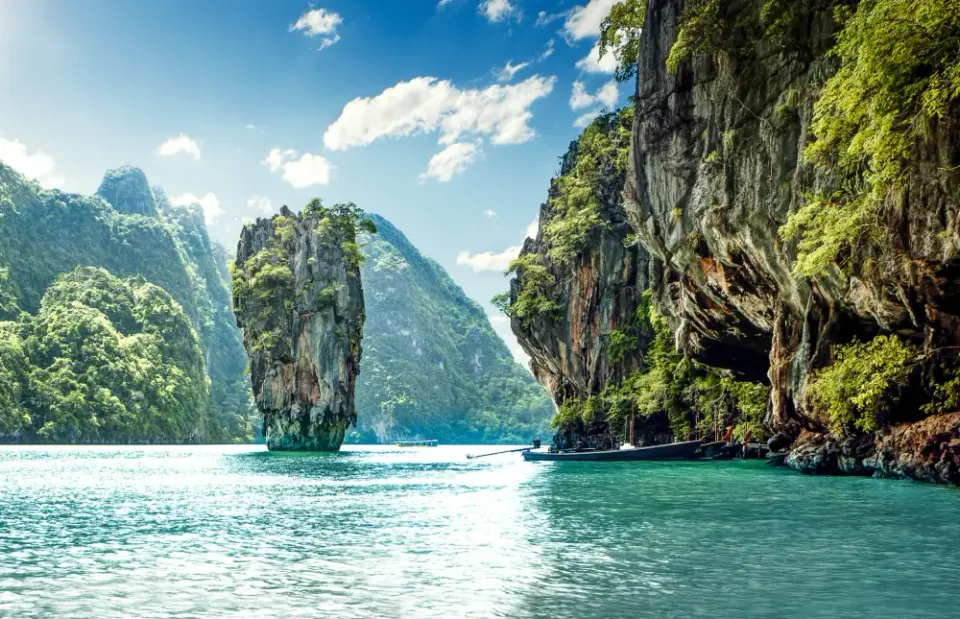
Phang Nga Bay is worth a full day if you want limestone scenery, sea caves, hongs and guided canoeing more than beaches or snorkeling. James Bond Island is the famous photo stop, but it is usually only one short part of the day. The bigger reason to go is the bay itself: steep karst towers, mangroves, cave passages, enclosed lagoons and the contrast of places such as Koh Panyee.
The important decision is not simply whether to book a “James Bond Island tour.” Current tours combine the same core sights in different ways. Some start before sunrise to reach popular places earlier, some add a beach or snorkeling stop, some spend much more time in caves and hongs, and some trade speed for a larger, slower boat. The result can feel like a relaxed scenic cruise, a fast multi-stop sightseeing day or a long nature-focused afternoon that ends after dark.
If you dislike fixed group schedules, you can also drive into Phang Nga Province, arrange a longtail boat from the mainland side and turn the journey into a road trip. Public transport is possible too, although it is much less convenient for a same-day excursion from Phuket’s west coast.
- Is Phang Nga Bay worth it?
- What tours actually offer
- Boat types and prices
- How to get there from Phuket
- Self-drive day itinerary
- Crowds, tides and weather
Phang Nga Bay at a glance: what you are actually visiting
Phang Nga Bay is a broad limestone seascape between Phuket and the mainland of Phang Nga Province. Its signature scenery comes from karst towers rising almost vertically from the water, mangrove-lined channels, caves and hidden lagoons known as hongs. A hong is an enclosed or partly enclosed lagoon inside a limestone formation, often reached through a tidal cave passage.
James Bond Island is not another name for Phang Nga Bay. The tourist name usually refers to the famous Ko Tapu rock and the nearby landing area at Ko Phing Kan. Visitors normally land at Ko Phing Kan and look across at Ko Tapu rather than landing on the rock itself. The stop became famous through The Man with the Golden Gun, but it is only one site inside a much larger landscape.
That distinction matters because Phang Nga Bay is not a classic “white-sand island hopping” day. The strongest experiences are usually the scenery between stops, canoeing through cave entrances, entering hongs when tides allow, moving through mangrove areas and seeing how the limestone formations change around the boat. Beach time and snorkeling can be added, but they are not the core reason to choose this trip.
Is Phang Nga Bay worth a full day for you?
For many first-time visitors, yes. It is one of the most distinctive landscapes accessible from Phuket, and the day feels very different from a beach-focused island excursion. But it is not automatically the right use of a limited holiday day for everyone.
Phang Nga Bay is a strong choice if you want scenery and exploration
You are likely to enjoy it if limestone landscapes, mangroves, caves and guided canoeing sound more interesting than reef snorkeling. It also works well for mixed groups because the day combines boat travel, short walks, canoe sections, a village or lunch stop and plenty of scenery without requiring everyone to swim.
Motion-sensitive travellers may also prefer the general setting to a more exposed open-sea crossing. Much of the sightseeing takes place inside a geographically sheltered bay. That does not mean the sea is always calm, and bad weather can still disrupt small-boat operations, but the experience is different from a long exposed run toward Phi Phi.
It depends on the tour if you want beaches, a late start or a slower pace
If you want some swimming or snorkeling, choose an itinerary that explicitly adds an outer island or beach such as Khai, Naka, Yao or Lawa. Do not assume “snorkeling equipment included” means a long or high-quality snorkeling session.
If you hate early mornings, avoid early-bird products. Standard daytime departures commonly collect guests later in the morning, while sunset and starlight formats may not start until late morning or around midday. The trade-off is a later finish.
If you dislike being moved from stop to stop on a fixed schedule, a shared speedboat with many advertised attractions may be the wrong format even if the destination itself appeals to you. A larger boat, specialist cave-focused trip or private longtail can make more sense.
Phang Nga Bay is probably not the best day trip if...
- Scuba diving is your main goal. Phang Nga Bay is not a core scuba-diving destination.
- Serious reef snorkeling is your priority. Some tours add snorkeling elsewhere, but that is an extra rather than the heart of the bay experience.
- You mainly want to lie on one beach. Most Phang Nga tours are structured sightseeing days with several transitions.
- You dislike full-day group excursions. Many shared departures take roughly 8–10 hours door to door, and specialist sunset formats can run later.
- James Bond Island is the only thing you care about. A typical stop is often in the 30–60 minute category, so sacrificing a whole holiday day only for the Bond photo may feel disproportionate.
What do Phang Nga Bay tours actually offer?
Tour names can make the market look more complicated than it is. Most current Phang Nga Bay excursions remix the same basic components in different orders and with different time allocations.
A typical daytime trip can include hotel pickup, a transfer to an east-coast Phuket pier or mainland Phang Nga pier, limestone cave scenery, a guide-paddled canoe section, James Bond Island, lunch at or near Koh Panyee, then an optional beach or swimming stop before returning to Phuket.
The common building blocks
- Panak, Hong or Talu-type cave and karst areas: scenic limestone zones where the exact cave or hong visited can change with tide and conditions.
- Canoeing or kayaking: often an inflatable canoe paddled by a local guide through a cave entrance or lagoon.
- James Bond Island: usually a relatively short photo and walking stop.
- Koh Panyee: a living Muslim fishing community that is also a common lunch stop on daytime tours.
- Beach or swim add-on: some products append Khai, Naka, Yao, Lawa or another beach so the day includes time in the water.
- Hotel transfer: often included from selected Phuket areas, but surcharges can apply to outer pickup zones.
The difference between a good fit and a frustrating day usually comes from timing, boat type, number of stops and how much time the itinerary gives to the activity you actually care about.
| Tour style | What the day actually feels like |
|---|---|
| Early-bird | Pickup can begin around 05:00–06:00, with an earlier boat and a mid-afternoon pier return. Best for crowd-sensitive visitors and photographers; poor fit if a pre-dawn alarm will ruin the day. |
| Standard daytime | Often around 07:00–09:00 pickup with a late-afternoon pier return. The most straightforward format for first-time visitors who want the main bay circuit. |
| Later-start / sunset / starlight | Starts late morning or around midday, with caves, hongs, sunset, dinner and sometimes after-dark nature experiences. Avoids the early alarm but can return to the hotel around 21:00 or later. |
| Beach/snorkel combo | Adds an outer island or beach for swimming, sunbathing or snorkeling. Better for mixed groups, but every extra stop reduces the time available elsewhere. |
| Cave/hong-focused | Spends more time around sea caves and lagoons, often following the tide more closely. Better for nature and kayaking; less focused on beaches or ticking off the maximum number of sights. |
| Coach + longtail | Includes more road travel in Phang Nga Province, often with a cave-temple stop before a traditional longtail. Useful for travellers who want a land-and-bay mix, but expect more minivan time. |
| Private / DIY | More control over start time, pace and priorities. Better for groups that dislike rigid schedules, but it costs more or requires more planning. |
How much time do you really get at each stop?
Do not judge a tour only by how many places appear in the title. Current schedules commonly place the James Bond Island stop somewhere in the roughly 30–60 minute category, while a canoe section, Koh Panyee lunch and a beach stop can each take around an hour depending on the product.
That is why an itinerary with six or seven named stops can feel fast. The boat ride between formations is part of the experience, but if you expect to arrive somewhere and explore independently for several hours, a shared multi-stop day may feel rushed.
How long is the real day, hotel to hotel?
For a standard shared departure from Phuket, roughly 8–10 hours door to door is a useful planning expectation. Hotel location, pier, boat type and itinerary all change the total.
Early-bird trips shift the day earlier rather than necessarily making it shorter. Coach-and-longtail products can spend more time on the road. Sunset or starlight trips can occupy the entire afternoon and evening, with hotel return around 21:00–21:30 on some current schedules.
If your only free day is also the evening you planned for a major dinner, nightlife or another activity, check the actual hotel-return time rather than the boat’s advertised duration.
Scuba diving and snorkeling: an important expectation check
Phang Nga Bay itself is not the day trip to choose for scuba diving. Its appeal is above-water karst scenery, caves, hongs and canoeing. Some tours carry snorkel equipment or add a separate beach/island stop, but that does not turn the bay into a reef-focused excursion.
If snorkeling is only a bonus, a Phang Nga plus beach combination can work. If scuba diving or clear-water reef snorkeling is the reason you are giving up a whole day, choose a destination built around that activity instead.
Which boat format should you choose?
The itinerary matters, but the boat can change the comfort and pace just as much. Prices vary by season, promotion, group size and inclusions, so use the figures below as a guide rather than fixed tariffs.
| Boat format | Best for and typical planning price |
|---|---|
| Shared big boat | More space, slower pace and generally the conservative choice for travellers who dislike a hard speedboat ride. Roughly 1,500–2,500 THB per adult. |
| Shared speedboat / speed catamaran | Faster transfers and more distance or stops in one day. Better for people who value pace over onboard space. Roughly 2,000–3,000+ THB per adult. |
| Specialist hong / sea-cave kayak trip | More time focused on caves, hongs and tide-led paddling, often with a later finish. Roughly 3,500–4,000+ THB per adult. |
| Private longtail from Phang Nga side | Useful for DIY groups wanting timing flexibility. Current examples are roughly 3,500–6,500+ THB per boat, before some extras. |
| Private speedboat from Phuket | High-cost option for groups paying for privacy and flexibility. Roughly 25,000–35,000+ THB per boat in mainstream examples, with premium charters much higher. |
Big boat: best for space and a gentler rhythm
A larger, slower boat gives you more room to move around and makes the boat journey itself a bigger part of the day. It is usually the first format to consider if you dislike the jarring ride of a small fast boat or simply prefer a slower pace.
The drawback is obvious: bigger groups, slower transit and less flexibility. “Big boat” also does not automatically mean wheelchair accessible. Boarding arrangements and mobility rules still vary by product.
Speedboat or speed catamaran: best for covering more ground
Fast boats shorten the transit between areas and make it easier to fit several stops into one day. That can be ideal if you want James Bond Island, canoeing, Koh Panyee and a beach add-on in a single itinerary.
The same advantage can become the downside. A long list of stops means more boarding, disembarking and clock-watching, and a small speedboat can be uncomfortable for travellers with back, neck or motion-sensitivity concerns. Speed catamarans and conventional speedboats also do not all ride identically, so check the actual vessel rather than relying only on the word “speed.”
Specialist cave and hong trips: best if kayaking is the reason you are going
If sea caves and hongs are what attracted you to Phang Nga in the first place, a specialist format is often a better match than a highlights checklist. These itineraries can spend materially more time around cave systems, follow tide windows more closely and sometimes combine guide-paddled canoeing with easier self-paddling sections.
They generally cost more and may finish later, but the higher price reflects a different use of the day rather than simply a more luxurious version of the same speedboat loop.
What is usually included in the price?
Shared tours commonly include many of the following, but never assume every item is covered:
- hotel pickup from selected Phuket zones;
- national-park admission;
- lunch and basic drinks;
- canoe/kayak activity;
- guide;
- life jackets and basic safety equipment;
- insurance.
Transfers from Rawai, Nai Harn, far-north beaches or other outer zones can attract a surcharge on some products. Private longtail arrangements from the mainland can separate the boat price from park admission, canoeing, lunch and road transfers.
The foreign-adult entrance fee for Ao Phang Nga National Park is 300 THB. Many shared packages already include it, so check before paying twice.
If you are budgeting the entire holiday rather than only this excursion, Rawai’s Phuket trip cost guide puts tours, food and transport into a wider daily budget.
How to get to Phang Nga Bay from Phuket
There are three practical ways to do it: use the transfer included with an organised tour, drive to the Phang Nga side and arrange a local boat, or use public transport to Phang Nga town and complete the last leg separately.
Organised tour: your hotel pickup is not the boat departure
Patong, Kata, Karon and the other west-coast resort areas are normally pickup zones, not boat departure points. The minivan collects guests and drives across Phuket to an east or northeast coast pier.
Common current departure points include Ao Po Grand Marina and Royal Phuket Marina, while some private and specialist trips use other east-coast marinas.
From Patong, Royal Phuket Marina is roughly 19 km away and normally requires around 30–45 minutes by road before pickup routing and traffic delays. Ao Po is farther, roughly 35 km from Patong, so allow around 50 minutes to 1 hour 15 minutes in normal planning.
The exact pier on your booking confirmation is the one that matters. If you plan to skip the hotel transfer and arrive independently, confirm both the pier and check-in time before travelling.
By rental car or your own car
Driving gives you the most freedom. Continue north across Sarasin Bridge into Phang Nga Province and arrange a longtail from the mainland side. Surakul Pier is the clearest default example for independent travellers; Tha Dan Pier is another practical departure point.
From Patong to Surakul, think in terms of roughly 80 km and 1 hour 30 minutes to 2 hours 15 minutes by car. From Rawai, the distance is about 90 km and the drive can easily take around 1 hour 40 minutes to 2 hours 30 minutes depending on conditions.
A mainland longtail is not automatically the same product as a Phuket hotel-to-hotel package. Park admission, canoeing, lunch, guide service and road transfers can be separate. Arrange the boat before making the entire day depend on finding the right boat and guide after you arrive.
By bus or minivan
Public transport is possible but awkward for a same-day excursion. The 438 Phuket–Krabi Transport service currently runs minivans from Phuket Bus Terminal 1 to Phang Nga Bus Station, with a scheduled journey of roughly 1 hour 40 minutes. Patong is also connected to Phuket Bus Terminal 1 by Phuket Smart Bus Route 2.
The important catch is that Phang Nga Bus Station is not the boat pier. It is still about 7 km by road from Tha Dan and about 13.5 km from Surakul, so you need a local taxi or private transfer for the last leg and then a separately arranged boat.
That multi-step journey can make sense for a budget traveller staying in Phuket Town or someone spending the night in Phang Nga. For a west-coast visitor trying to do the whole bay and return the same day, an organised pickup or rental car is much simpler.
Can you go by train or public ferry?
No useful train shortcut exists. Phuket has no railway station, and Phang Nga town is not served by a rail line that solves this journey. There is also no ordinary public ferry from Patong or Phuket’s west-coast beaches into the Phang Nga Bay sightseeing circuit. A road transfer to a suitable pier is still required.
A self-drive Phang Nga Bay day from Phuket: a realistic road-trip itinerary
If you are already renting a car, the road journey can add genuine value rather than functioning only as a transfer. The key is to keep the bay as the main event and add one or two land stops that fit naturally around it.
Rawai’s Phuket itinerary for 1 to 7 days explains where a Phang Nga day fits into a wider holiday. The route below focuses only on making that specific day work.
The best-balanced route
- Leave Phuket early. You need enough margin for road traffic, boat check-in and tide-dependent changes.
- Optional stop at Sarasin Bridge. It is directly on the route to the mainland, so 10–20 minutes for a stretch and view does not disrupt the day.
- Continue to a pre-arranged boat at Surakul or Tha Dan. Half-day longtail trips of roughly 3–4 hours are available, but the exact route and duration depend on your arrangement, tide and weather.
- Explore the bay. Check beforehand whether your longtail arrangement includes the cave/hong areas, James Bond stop, Koh Panyee and canoeing; a private boat does not automatically include the same circuit as a packaged Phuket tour.
- Add Wat Suwan Khuha after the boat if you still have time and energy.
- Return to Phuket before the route becomes a checklist.
This works because Wat Suwan Khuha is only about 6.5 km from Surakul and roughly 9 km from Tha Dan. A 30–45 minute visit is enough for most travellers to see the cave temple and reclining Buddha without turning the afternoon into another major excursion.
Why Wat Suwan Khuha is the easiest land add-on
Wat Suwan Khuha is an active Buddhist cave temple rather than simply a roadside attraction. Dress respectfully. Macaques are common around the entrance, so keep food and loose belongings secured instead of treating monkey feeding as part of the visit.
The temple gives the day a useful contrast: the morning or midday is about water, limestone and mangroves; the land stop adds a cave-temple experience without a large detour.
Sunrise version: Samet Nangshe before the boat
For photographers, Samet Nangshe Viewpoint creates a completely different version of the day. The panorama looks across Phang Nga Bay’s limestone formations and is especially popular around sunrise.
Do not treat it as a quick post-boat roadside stop. From Sarasin Bridge to Samet Nangshe is about 25 km and roughly 30 minutes in a clean traffic baseline. From the viewpoint to Surakul is another roughly 34 km and around 40 minutes; Tha Dan is farther.
If you start from Patong, work backward from that day’s sunrise and allow roughly 1½–2 hours to reach the area, then leave further time to reach the pier. The upper access is steep and current visitors use a small paid local truck or shuttle. Check the current opening time and shuttle arrangement before leaving; the price has changed across recent sources, so it is better not to rely on an old figure.
Better for photographers: stay one night near Samet Nangshe
If sunrise matters enough to justify a pre-dawn departure from the west coast, consider staying on the Phang Nga side instead. Drive over the previous afternoon, stay near the viewpoint, see sunset or sunrise, eat breakfast and continue to the pier afterward.
This is the strongest reason to turn the excursion into an overnight. It improves the land part of the trip and avoids a very early drive from Phuket; it is not necessary for seeing James Bond Island or the main bay circuit.
Other stops that only make sense when the timing fits
Ao Tho Li Viewpoint is a quieter, more rustic panorama in the same broad area as Samet Nangshe. Choose it instead of Samet Nangshe rather than stacking both.
Long Lae Market is a local-food option on Sundays, but its morning-to-afternoon opening window clashes with the most useful boat time. It makes more sense on an overnight or deliberately shorter bay schedule.
Raman Waterfall can be attractive in the green season, but opening status has been inconsistent enough that it should only be added after a same-day check.
Tham Phung Chang is close to Phang Nga town but substantial enough to deserve real time. Treat it as part of a mainland extension or shorter-boat day rather than another 20-minute tick-box after a full bay circuit.
What not to cram into one day
Samet Nangshe sunrise + full bay circuit + Wat Suwan Khuha + waterfall + local market + another cave + a west-coast Phuket return looks efficient on a map and feels exhausting in practice. The advantage of self-driving is control over timing, not the ability to collect every attraction in Phang Nga Province before dinner.
Foreign visitors who drive should also carry a licence valid for Thailand and check the rental company’s insurance conditions. A DIY road trip gives you control over the land portion of the day; it does not make difficult tidal cave passages suitable for unguided kayaking.
Kayaking, sea caves and hongs: what the activity is really like
This is one of the biggest reasons to choose Phang Nga over a beach-focused excursion, but the words “kayak” and “canoe” are used loosely in tour marketing.
On many standard trips, one or two guests sit in an inflatable canoe while an experienced local guide paddles. That is useful in narrow tidal passages where the paddler needs to judge roof clearance, current, rocks and the route into a hong. It is not the same experience as renting a kayak and exploring independently.
Some specialist products add self-paddling in easier open-water sections, so read the activity description if paddling yourself matters to you.
Tides decide which caves can be entered
There is no simple rule that “low tide is best.” If the water is too high, there may not be enough clearance under a cave roof. If it is too low, mud, rocks or insufficient water can make another passage unusable.
That is why responsible crews change the order of stops and choose accessible caves according to the day’s tide and weather. A tour that does not guarantee one exact cave can actually be more realistic than a rigid timetable.
If you are claustrophobic or dislike very dark, low cave passages, check how much cave canoeing the product includes before booking. A general sightseeing tour may be easier than a hong-focused specialist day.
James Bond Island: is it actually worth it?
James Bond Island is worth seeing if you already want the Phang Nga Bay experience. The view of Ko Tapu is instantly recognisable, the film-location history is fun, and the stop gives first-time visitors the photo they expected.
What it should not do is determine the whole day by itself. It is one of the busiest stops in the circuit and shared tours commonly spend only a limited amount of time there. The site can feel crowded, especially when several boats overlap.
A better way to think about it is this: if caves, hongs, canoeing and the karst scenery appeal to you, James Bond Island is a logical iconic stop inside a worthwhile day. If the Bond rock is the only part you care about, the time and money required for a full excursion may not be a good trade.
Koh Panyee and where to eat
Koh Panyee is often described as a floating village, but that shorthand can make it sound like a purpose-built tourist attraction. It is a living Thai Muslim fishing community built largely over the water, with homes, local facilities, restaurants, shops and a strong tourism economy.
On mainstream daytime tours, it commonly functions as a lunch stop and short village walk. That makes it part of the cultural contrast of the day rather than simply a place to eat.
If lunch is included with your tour
Expect a practical group meal rather than a guaranteed culinary highlight. Buffet lunches on Koh Panyee are common, and halal food is widely available in the Muslim community. Larger tour groups are usually directed to venues designed to handle volume.
Meal quality and service vary, so do not choose a Phang Nga tour because the listing makes lunch sound luxurious. Check dietary requirements before booking if they matter to you.
If you are travelling independently
Independent visitors have more freedom to choose smaller local restaurants rather than the larger tour-group buffets. That is another minor advantage of a self-drive + longtail day, although restaurant opening and boat timing still need to line up.
Crowds, tides, weather and the best time to go
Crowds: James Bond Island is the main bottleneck
James Bond Island is the strongest crowd concentration point. Koh Panyee around lunchtime and popular canoe zones can also feel busy when several groups overlap.
Early departures can reduce overlap at some stops, and later specialist schedules can miss part of the morning wave. Private boats give more control over timing. None of these options can guarantee an empty iconic site, and tide windows sometimes matter more than crowd avoidance.
Best broad season: November to February
November to February is the easiest general period for drier weather and calmer conditions. It is also the busiest period, so good weather does not mean quieter attractions.
Shoulder months can work very well. Green-season trips also operate, and dramatic clouds and lush scenery can suit the landscape, but same-day marine conditions matter more than seasonal averages.
Rainy season does not mean the whole bay is closed
Do not assume Phang Nga Bay shuts every August or September. Official park information has historically shown selective seasonal closures of particular zones rather than a blanket annual closure of the whole standard sightseeing circuit.
What can stop a trip is the actual weather. Strong southwest-monsoon episodes can produce wind, waves and small-boat restrictions even inside or around a generally sheltered bay. Check the current forecast and accept that crews or park authorities may alter the route, skip a stop or cancel the trip.
Seasickness, children, seniors and reduced mobility
If you get seasick
Phang Nga Bay can be a better fit than Phi Phi for some motion-sensitive travellers because much of the experience takes place in a more sheltered setting. It is not seasickness-proof.
A larger, slower boat is generally the conservative choice if motion is a concern. A small fast speedboat can produce a harder ride, and weather on the day still matters more than the destination name.
With children
The bay can work very well for families. The scenery is visual, the canoe sections are often guide-paddled and children do not have to be strong swimmers to enjoy the main sightseeing.
The long day can still be tiring for very young children, and dark or narrow cave entrances may not suit a child who dislikes confined spaces. Age bands, life-jacket sizes and product rules vary, so confirm the exact conditions rather than assuming every tour uses the same minimum age.
Seniors, pregnancy and reduced mobility
There is no single rule for all Phang Nga tours. Some speedboat products have stricter age, pregnancy, back or neck restrictions. A big boat may be physically easier, but it is not automatically wheelchair accessible.
Choose the boat style first, then ask the seller about the exact boarding method, pier steps, transfers, canoe entry, age limits, mobility support and insurance conditions for that product. Destination-level advice is not enough here.
Phang Nga Bay vs Phi Phi: which day trip is better?
They suit different priorities.
Choose Phang Nga Bay if you want limestone karsts, mangroves, caves, hongs and guided canoeing. It is less focused on beaches and reef snorkeling, and the setting is generally more sheltered.
Choose Phi Phi if Maya Bay, beaches, clear-water snorkeling and the classic Phi Phi island scenery matter more. The journey also involves a more exposed open-sea crossing.
If you have time for both, they do not feel repetitive. The Rawai Phi Phi Islands guide covers ferries, Maya Bay, beaches, snorkeling and where to stay in more detail.
Is it worth staying overnight in Phang Nga?
For the standard bay circuit, no. You can see the main karst scenery, canoe sections, James Bond Island and often Koh Panyee on a normal full-day trip from Phuket.
One night becomes worthwhile if the overnight changes the experience rather than merely moving your bed. The strongest reason is Samet Nangshe sunrise: staying on the Phang Nga side avoids a pre-dawn drive from Patong or another west-coast resort and makes the viewpoint much easier to enjoy.
A slower mainland itinerary, community stay or niche night on Koh Panyee can also appeal to travellers who want to see more of Phang Nga Province after the day-tour crowds leave. It does not materially improve the James Bond Island stop itself.
Phang Nga Bay FAQ
Is Phang Nga Bay the same as James Bond Island?
No. James Bond Island is one famous stop inside the much larger Phang Nga Bay area. The bay also includes karst scenery, caves, hongs, mangroves, Koh Panyee and other islands and formations.
How long is a Phang Nga Bay tour from Phuket?
Many standard shared tours take roughly 8–10 hours door to door. Early-bird departures start earlier, while sunset and starlight formats can return to the hotel around 21:00 or later.
How much does a Phang Nga Bay or James Bond Island tour cost?
Expect roughly 1,500–2,500 THB per adult for a shared big boat, 2,000–3,000+ THB for a shared speedboat or speed catamaran, and 3,500–4,000+ THB for specialist hong-kayak trips. Private boats cost substantially more.
Is the national-park fee included?
Often, but not always. Many shared tours include Ao Phang Nga National Park admission, while some private or mainland longtail arrangements charge it separately. The current foreign-adult fee is 300 THB, so check the inclusion list before paying.
Do you paddle the kayak yourself?
Often no. On many standard cave/hong trips, a local guide paddles an inflatable canoe while guests sit in front. Some specialist tours also include self-paddling in easier sections.
Do tides affect Phang Nga Bay kayaking?
Yes. High water can reduce cave-roof clearance, while very low water can expose mud or rocks. Crews may change the stop order or choose different cave entrances according to the tide.
Is Phang Nga Bay good if I get seasick?
It can be a better fit than a more exposed open-sea trip, but it is not guaranteed to be calm. Consider a larger/slower boat and check the weather on the day.
Is Phang Nga Bay suitable for children?
Often yes, especially because many canoe sections are guide-paddled. Very young children may find the long day tiring, and age, safety-equipment and boat rules vary by product.
Is James Bond Island worth visiting?
Yes if you already want the wider Phang Nga Bay day. It is an iconic but usually short and busy photo stop. It is a weak reason to spend a whole day if the rest of the bay does not interest you.
Can you visit Phang Nga Bay without an organised tour?
Yes. You can drive to a mainland pier such as Surakul or Tha Dan and arrange a longtail boat, or use public transport to Phang Nga town and complete the final transfer separately. The self-drive option is much easier for a same-day trip.
Should you stay overnight?
Not for the standard bay circuit. Stay one night if Samet Nangshe sunrise, a slower mainland route or a community stay is part of the reason you are visiting.