Rawai Phuket Guide 2026: Beaches, Restaurants, Nightlife, Things to Do & Where to Stay
A practical Rawai Phuket guide covering beaches, restaurants, nightlife, fitness, shopping, where to stay, transport and Rawai vs Nai Harn.
Quick answer: Rawai is a very practical base in southern Phuket if you want good restaurants, easy access to Nai Harn and Ya Nui, island trips, gyms, Muay Thai, local markets and a more residential atmosphere than Patong. The main trade-offs are that Rawai is spread out, Rawai Beach itself is not the area's main swimming beach, and you will usually rely on some form of transport.
Rawai suits couples, repeat visitors, food-focused travellers, people planning an active holiday and anyone staying more than a few nights. It is a weaker choice if you want to step out of your hotel onto a classic swimming beach, walk almost everywhere, or make large-scale nightlife the centre of the trip.
If you are planning a stay of several weeks or a move rather than a normal holiday, the priorities change. Schools, childcare, long-term rentals, healthcare, internet and daily commuting matter much more. Our separate Living in Rawai guide covers those subjects in depth; this page stays focused on Rawai as a visitor base.
In this guide
- Rawai at a glance
- Beaches & things to do
- Food, sport & nightlife
- Shopping & where to stay
- Getting around
- FAQ
Rawai at a glance: is it a good place to stay?
Yes, for the right type of Phuket trip. Rawai is a broad southern area rather than a compact resort strip. Its appeal comes from having a working waterfront, seafood, nearby swimming beaches, viewpoints, fitness, restaurants and everyday services within the same part of the island.
| Rawai suits you if... | Consider another area if... |
|---|---|
| You want a quieter southern base with restaurants, cafés, gyms and local services. | You want a dense, highly walkable resort where almost everything is outside your hotel. |
| You plan to use Nai Harn, Ya Nui, Promthep Cape and nearby islands. | You want a classic swimming beach directly in front of your accommodation. |
| You like seafood, international dining, fitness, Muay Thai and a more lived-in atmosphere. | Your main priority is Bangla Road, large clubs and the biggest concentration of nightlife. |
| You are comfortable using ride-hailing, taxis, a car or a properly licensed scooter. | You want to avoid regular transport completely. |
One point matters before you book: Rawai and Rawai Beach are not the same thing in practical travel terms. Rawai is the wider area. Rawai Beach is one waterfront within it, used mainly for boats, seafood, restaurants and local coastal life rather than as the area's main swimming beach.
Rawai Beach, Sai Yuan and Nai Harn: understand the area before booking
Hotel and rental websites often use “Rawai” for properties spread across several different micro-areas. Two places can both have Rawai in the address and still create very different holidays. Exact location matters more here than it does in a compact resort town.
Rawai beachfront
This is the best zone for the waterfront atmosphere: longtail boats, seafood, Rawai Seafood Market, restaurants and some of the area's bars. It is also convenient for trips toward Ya Nui and Promthep Cape.
The beachfront still reflects Rawai's fishing and boat culture. Rawai is also home to a Chao Le community, sometimes labelled the “Sea Gypsy Village” in older English travel material. This is a living fishing community, not a tourist attraction, and it remains part of the waterfront's working character.
Choose the beachfront for atmosphere, food and boats, not because you expect to swim outside your hotel every morning.
Sai Yuan and inland Rawai
Sai Yuan is especially convenient for daily life. Restaurants, cafés, gyms, supermarkets, clinics and residential developments are spread along and around the main roads. It suits longer stays and travellers who want easy access to fitness and food without living directly on the waterfront.
The downside is that the area is spread out. A restaurant, gym and supermarket can all be nearby on a map but still be unpleasant to connect on foot in heat, rain or traffic.
Nai Harn
Nai Harn is the beach-first option. Nai Harn Beach lies within the wider Rawai administrative area, but travellers normally treat it as a distinct stay zone because the daily experience is different: the lake, beach and surrounding restaurant roads become the centre of the trip.
If swimming and easy beach access matter more than boats or the Rawai waterfront, Nai Harn is usually the better local choice. You still remain close to Rawai's restaurants, gyms and services.
Ya Nui and the Promthep side
The Ya Nui/Promthep side puts Ya Nui Beach, Windmill Viewpoint and Promthep Cape close together. Accommodation here can feel quieter and more tucked away, but there are fewer everyday services immediately outside the door than around Sai Yuan or the Rawai beachfront.
Best beaches around Rawai
Rawai Beach: waterfront and boats, not the main swimming beach
Rawai Beach is not the place for a classic swim-and-sunbathe day. The shoreline is tidal, boats occupy much of the water, and the waterfront functions primarily as a boat, fishing and dining area.
Rawai Beach is still worth visiting for seafood, boat departures, a waterfront walk and the local atmosphere. It simply serves a different purpose from Nai Harn or Ya Nui.
Nai Harn Beach: the main swimming-beach choice
Nai Harn is the principal nearby beach for regular swimming and a major reason people choose Rawai as a base. From Rawai Beach it is only about 3 km away, usually around 10–15 minutes by car or motorbike outside heavy congestion.
Sea conditions still matter. During the wetter monsoon period, waves and currents can become stronger, so beach flags and the conditions on the day should override any general seasonal description. For a wider island comparison, see our guide to the best beaches in Phuket.
Ya Nui Beach: small-cove option
Ya Nui is much smaller than Nai Harn and has a more intimate cove feel. It is popular for swimming and, when the sea is suitable, snorkelling or kayaking. The cove is rocky in places, and conditions can change quickly, so do not assume calm water every day of the year.
Ao Sane: a secondary cove, not a guaranteed easy stop
Ao Sane is a smaller rocky cove on the Nai Harn side that can suit travellers looking for a quieter beach or possible snorkelling. Access and parking around the headland have changed during nearby construction, so treat it as an optional extra rather than a beach to build the whole day around.
Laem Ka is not a reliable beach alternative at present. The beach exists, but land access through private property has remained restricted or unreliable.
Best things to do in Rawai
Walk the Rawai waterfront and visit the Seafood Market
A simple Rawai outing can start on the waterfront, continue through the seafood area and finish with a meal. The scene is more about boats, food and local coastal activity than beach lounging, which is exactly why it is worth seeing even if you spend your swimming time elsewhere.
Rawai Seafood Market on Google Maps
Take a longtail from Rawai to Coral Island
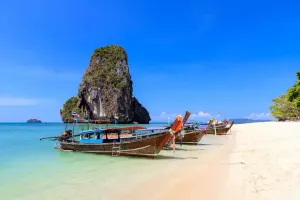
Direct local boat access is one of Rawai's main advantages. Coral Island, also called Koh Hey, is the clearest nearby example. Standard organised speedboat packages usually operate from Chalong, while Rawai suits travellers who want to arrange a more flexible private or local longtail trip.
There is no single standard “Rawai longtail price”: fares vary widely between walk-up longtails, packaged trips and higher-service charters. Before boarding, agree the total return price, exact destination or drop-off beach, whether the boat waits or returns later, the return time and any extra island or landing charges that apply. Tide and sea conditions can also affect boarding and the day's plan.
Racha Yai is a more ambitious option for beach, snorkelling or diving. Chalong remains the standard organised departure point, while some private boats can depart from Rawai when conditions allow.
Promthep Cape for sunset
Promthep Cape is Phuket's classic southern viewpoint and an easy sunset stop to combine with Rawai. The upper viewpoint is straightforward to reach by road. The lower cape trail is a separate, steeper outing and is not required for the main view.
Sunset is also the busiest time, so arriving before the final rush makes parking and finding a viewpoint easier.
Windmill Viewpoint
Windmill Viewpoint is a smaller scenic stop above Ya Nui. It gives you a closer view over the cove and Koh Man than Promthep, making it a good quick stop before or after the beach. Parking is limited, especially at popular times.
Windmill Viewpoint on Google Maps
More experienced hikers can consider Black Rock and Krating Cape, but both involve more difficult access and a different kind of outing. Our Phuket viewpoints guide is the better place to compare them.
Local markets, temples and smaller stops
Rawai Monday & Thursday Market is a local produce and prepared-food market. Do not confuse it with the nearby Rawai Moving Market, which is a separate market with a different schedule. The Monday/Thursday market feels more like an everyday neighbourhood market than the seafood-focused waterfront.
Rawai Monday & Thursday Market on Google Maps
Wat Naiharn fits naturally into a Nai Harn beach day, while Wat Sawang Arom is a small neighbourhood temple near the Rawai waterfront. Neither is comparable with Phuket's major temples; see our guide to the best temples in Phuket for the larger island-wide choices and etiquette.
Phuket Art Village can add a small cultural stop, while Rawai Park may be useful for families with children; neither is essential. Phuket Seashell Museum is permanently closed.
Sport, fitness and training around Rawai
If training matters during your trip, Rawai is particularly convenient. The area has enough conventional gyms, coached facilities, Muay Thai and recovery services for training to fit naturally around beach time and meals.
Gyms and fitness in Rawai and Nai Harn
Rawai Gym & Fitness, The Cult Fitness Society, FX Fitness, Nai Harn Gym and Stay Fit show the range available, from conventional gym access to more coached or specialised training. For a detailed comparison, see our Best Gyms in Phuket guide.
Muay Thai and MMA training
Rawai has a genuine training-holiday scene, with camps such as Sinbi Muay Thai, AKA Thailand and Southside MMA among the better-known examples. Even recreational visitors often choose the area so they can train daily while keeping beaches and restaurants nearby.
If Muay Thai is the main reason for your trip, use our dedicated Rawai Muay Thai camps guide for camp styles, prices and practical comparisons.
Nearby Soi Ta-iad, or Fitness Street, in Chalong
Soi Ta-iad is in Chalong, not Rawai, but it is close enough to matter. The street is lined with gyms, conditioning facilities and combat-sports camps, including Unit 27, Superfit and Titan Fitness Camp. From Rawai, it is typically a short drive rather than a cross-island journey.
That combination lets you stay closer to beaches and restaurants while keeping one of Phuket's largest training clusters nearby.
Where to eat in Rawai
Rawai's food scene is one of its biggest advantages. Seafood is only part of it: the area also has local Thai food, Italian and Mediterranean restaurants, healthy cafés, international comfort food and polished resort dining.
Rawai Seafood Market: how it works
The classic experience is to buy seafood in the market area and have it prepared at a nearby restaurant. The displayed seafood price is not necessarily the final cost of the meal. Before handing anything over for cooking, confirm the weight, cooking method, preparation fee and estimated total.
Do not assume the market is automatically the cheapest place to eat seafood. The value depends on what you buy, how it is priced and where it is cooked. It is better to treat the market as a distinctive Rawai food experience than as a guaranteed bargain.
Four Rawai and Nai Harn restaurants worth knowing
Mook Manee is one of the area's best-known seafood restaurants beside the Rawai waterfront and market. It remains listed in the MICHELIN Guide and is well suited to travellers who want the full Rawai live-seafood experience in a restaurant setting. Google Maps.
Salaloy Seafood is a long-established Thai seafood restaurant on the waterfront, better suited to a sit-down meal than the buy-and-cook market experience. Google Maps.
NIBE | Authentic Italian Aroma shows the other side of Rawai dining: a more polished Italian dinner rather than another seafood stop. It is a good example of why Rawai's restaurant scene is broader than many first-time visitors expect. Google Maps.
M&M's Pizzeria & Spaghetteria is the casual Nai Harn option: long-established, popular and a good choice for a straightforward Italian meal near the Nai Harn/Sai Yuan restaurant corridor. Google Maps.
Samut is a notable fine-dining name near Nai Harn, but as of August 2026 it is listed as temporarily closed, so it is not included among the recommendations above.
Nai Harn Lake and the road to the beach: restaurants and bars
Nai Harn is not just a beach with resort restaurants. A restaurant-and-bar corridor runs between the lake, the beach approach and the Sai Yuan/Wiset side. M&M's is part of it, with other options including Unni's Restaurant, Lakeside Cafe & Bar and Rock Salt by The Nai Harn.
The area is not a tiny pedestrian centre where every restaurant is side by side, but there is enough density that staying around Nai Harn still gives you a real choice of evening food and drinks without returning to the Rawai waterfront every night.
Beyond seafood: Sai Yuan and international dining
Sai Yuan and inland Rawai have the area's broadest mix of casual international dining and cafés. That variety is especially welcome on longer stays, when you may want something other than seafood or hotel dining. Thai restaurants, Western comfort food, healthy cafés and international kitchens are all part of the local mix.
For a much broader island-wide shortlist, see our Best Restaurants in Phuket guide.
How expensive are restaurants in Rawai?
Restaurant prices in Rawai vary widely. Local Thai food and markets sit at the lower-cost end, casual international restaurants around Sai Yuan and Nai Harn form the middle, and waterfront seafood, dishes using imported ingredients and polished resort dining can cost much more. At the Seafood Market in particular, the final bill depends on seafood weight, preparation and cooking charges, so compare the full cost rather than one price on a seafood tray.
Rawai nightlife: where people actually go out
Rawai has real nightlife, but it is not a smaller copy of Patong. Rather than one continuous nightlife strip, it has three distinct clusters: Laguna Plaza for concentrated late-night activity, Rawai Beach/Wiset Road for social bars and live music, and Sai Yuan/Nai Harn for sports bars and a more resident-oriented evening scene.
Laguna Plaza and Club ZHU
Laguna Plaza is Rawai's main late-night hub. Several small bars operate around the complex, with Club ZHU as the nightclub within it. ZHU occupies the venue that previously operated as Laguna nightclub, so Laguna nightclub and Club ZHU should not be counted as two separate clubs.
This is the place to know if you want the closest thing Rawai has to a conventional late-night club area, but the overall scale is still far below Patong.
Rawai Beach and Wiset Road: social bars and live music
Not every evening needs to end in a club. Sunshine Bar is a lively social bar, while Freedom Bar Rawai is a useful live-music option near the beach road. This side of Rawai nightlife is more about drinks, music and a social atmosphere than large clubs.
Sunshine Bar on Google Maps
Freedom Bar Rawai on Google Maps
Sai Yuan and Nai Harn: sports bars and local regulars
The Sai Yuan/Nai Harn side is more food- and sports-oriented. The Clubhouse Sports Bar Rawai and Islander Sports Bar and Restaurant both draw residents and expats alongside visitors. There is no single official “expat bar”; Rawai simply has an established social scene beyond tourist-only nightlife.
The Clubhouse Sports Bar on Google Maps
Islander Sports Bar on Google Maps
If nightlife is your main reason for choosing an area, compare Rawai with the wider options in our Phuket bars and nightlife guide.
Shopping and groceries in Rawai
Rawai does not have a major destination mall like Central Phuket or Jungceylon, but you do not need to travel to Patong or Phuket Town for everyday shopping. Groceries, self-catering supplies and daily errands are easy to handle locally.
Mixxmall Rawayana: the small beachfront mall
Mixxmall Rawayana is a compact community mall on the Rawai beachfront side. It combines a supermarket with smaller food and retail options, making it convenient for nearby hotels and condos. Think of it as a neighbourhood mall rather than a shopping attraction.
Mixxmall Rawayana on Google Maps
Where to buy groceries in Rawai
For larger grocery runs, options include Makro Rawai, Makro Foodservice Rawai, GO Wholesale Rawai and several SuperCheap branches. If you are self-catering in a villa or condo, there is little reason to leave Rawai for routine groceries.
Makro Rawai on Google Maps
GO Wholesale Rawai on Google Maps
For a full mall, nearby Chalong is enough
Robinson Lifestyle Chalong is the nearest useful full-size mall for fashion, electronics, department-store shopping, cinema, restaurants and services. Villa Market in Chalong is also a good option for imported and international groceries.
For most mall shopping, Chalong is enough; there is no need to go to Patong unless you specifically want Patong itself. For the full island-wide comparison, see our Phuket shopping guide.
Robinson Lifestyle Chalong on Google Maps
Why Rawai feels different: the residential and long-stay side
Rawai feels more lived-in than a typical resort strip. Supermarkets, schools, childcare, clinics, gyms, coworking spaces and international restaurants are all part of the broader Rawai/Sai Yuan/Nai Harn area.
That mix also explains Rawai's appeal to long-stay residents and remote workers. There is no single “expat district” or “digital nomad street”; the most convenient areas depend on the services you want nearby.
Sai Yuan for everyday convenience
Sai Yuan combines restaurants, gyms, supermarkets, clinics, condos and villas within a relatively compact part of inland Rawai. The roads, however, are not always pleasant to walk.
The Title and Rawayana beachfront cluster
The lower Wiset Road and Rawai beachfront have another condo-heavy cluster around The Title developments and Rawayana. Mixxmall/Tops, restaurants, bars and coworking options such as Let's Work and Grind Time make this stretch convenient for a longer stay.
If remote work is important, our Phuket coworking guide compares the main workspace options in more detail.
Where to stay in Rawai
In Rawai, where you stay often matters more than which hotel brand you choose. A property advertised as “Rawai” can sit near the waterfront, around Sai Yuan, toward Nai Harn or deeper in a residential lane. Check the actual road, walking conditions and route to the places you expect to use most.
Rawai beachfront: best for food, boats and atmosphere
Choose the beachfront if you want restaurants, seafood, boat activity and easier access to the southern viewpoints. The condo-heavy The Title/Rawayana side is particularly practical for longer stays because groceries and coworking are nearby.
The main drawback is simple: Rawai Beach is not your daily swimming beach. You will still travel to Nai Harn, Ya Nui or another beach.
Nai Harn: best for a beach-first stay
Choose Nai Harn if the swimming beach is the centre of your trip. The Nai Harn and SUNSURI are two well-known resort examples in this zone, but you do not need to stay in a large resort to benefit from the location. The restaurant corridor around the lake and beach approach gives the area more evening choice than the map may suggest.
Sai Yuan and inland Rawai: best for restaurants, gyms and routine
Sai Yuan works especially well for travellers staying longer, training regularly or eating out often. The trade-off is greater dependence on transport for the beach and waterfront.
If you are still comparing Rawai with Kata, Patong, Bang Tao or other parts of Phuket, our Best Areas to Stay in Phuket guide is the better island-wide comparison.
Best time to visit Rawai
For a beach- and island-heavy trip, December through March is generally the easiest period, with the broader drier/high-season pattern running roughly from November to April.
Rawai remains a viable base from May through October. Restaurants, gyms and everyday services still operate, and the area can feel quieter. The main difference is that rain, wind, waves and red flags make swimming and boat plans less predictable. Check actual sea conditions rather than assuming a month guarantees calm water.
Getting around Rawai
Rawai is spread out. You can walk within small pockets, but the area does not function like a compact beach town where the hotel, beach, restaurants and nightlife are always on the same block.
Ride-hailing, taxis and private drivers
Grab, Bolt, taxis and private drivers all operate in southern Phuket. Pickup time and price vary with demand, weather and time of day, so compare live quotes rather than assuming one app is always cheapest. For early flights or other trips where timing matters, a pre-arranged transfer can be more reliable than a last-minute pickup.
Our Grab, Bolt, taxi and tuk-tuk guide for Phuket explains the differences in more detail.
Phuket Smart Bus
As of August 2026, the official Phuket Smart Bus Airport–Rawai route runs through Patong, Karon and Kata before reaching the Rawai side, with stops including Sai Yuan, Rawai Beach and Promthep Cape. The published Airport–Rawai fare is 100 THB.
The bus helps with longer trips along its route, but it does not make every local Rawai journey direct. If your accommodation, gym, restaurant or beach is away from the main road, you may still need a short taxi or ride-hailing trip.
Do you need a scooter or car?
No. You can stay in Rawai using ride-hailing, taxis and the Smart Bus, especially if you choose accommodation close to your daily priorities. A car or scooter simply makes the spread-out geography easier.
Only ride a scooter if you are properly licensed for the vehicle and comfortable with Phuket traffic. Rawai is not a good place to learn from scratch simply because a scooter is convenient.
How far is Rawai from the rest of Phuket?
The distances below start from Rawai Beach. Your hotel may be several kilometres closer to or farther from each destination, and traffic can change travel times significantly.
| Destination | Approximate distance and drive time |
|---|---|
| Nai Harn Beach | About 3 km; roughly 10–15 min by car or motorbike |
| Ya Nui Beach | About 4 km; roughly 10–15 min |
| Promthep Cape | About 3 km; roughly 10–15 min |
| Soi Ta-iad / Fitness Street, Chalong | About 10 km; roughly 15–25 min |
| Kata Beach | About 12 km; roughly 20–30 min |
| Old Phuket Town | About 15 km; roughly 30–45 min |
| Patong | About 21 km; roughly 35–55 min |
| Phuket International Airport | About 46 km; roughly 1–1.5 hours by car |
Who should stay in Rawai, and who should stay elsewhere?
Rawai suits travellers who value good food, nearby beaches, fitness, southern viewpoints, island access and a quieter base. It becomes especially appealing on stays of more than a few nights, when the area's supermarkets, cafés, gyms and other everyday services are more useful.
Nai Harn may be better if a good swimming beach is the absolute priority for the trip. Patong may be better if nightlife, dense entertainment and walkability are the priorities. Other west-coast areas may suit you better if you want a classic resort strip with the beach and most services directly outside the hotel.
Frequently asked questions
Is Rawai Beach good for swimming?
Not as your main swimming beach. Rawai Beach is primarily a working waterfront with boats, seafood and a tidal shoreline. Nai Harn is the main nearby swimming-beach choice, with Ya Nui as a smaller cove alternative.
Is Rawai a good place to stay in Phuket?
Yes if you want restaurants, beaches nearby, fitness, island access and a quieter southern base. It is less suitable if you want a highly walkable resort or a classic swimming beach directly outside your hotel.
Is Rawai or Nai Harn better?
Nai Harn is usually better for a beach-first stay. Rawai and Sai Yuan offer more restaurants, gyms, groceries, boats and everyday services. The areas are close enough that many visitors use both during the same stay.
What are the best things to do in Rawai?
Highlights include the Rawai waterfront and Seafood Market, a longtail trip to Coral Island, Nai Harn and Ya Nui beaches, Promthep Cape, Windmill Viewpoint, local markets and the area's sport and fitness scene.
Does Rawai have nightlife?
Yes. Laguna Plaza and Club ZHU form the main late-night hub, Rawai Beach/Wiset Road has social and live-music bars, and Sai Yuan/Nai Harn has sports bars and a more resident-oriented scene. It is still much smaller than Patong.
Is Rawai good for gyms and fitness?
Yes. Rawai and Nai Harn have multiple gyms and training facilities, Rawai has a strong Muay Thai/MMA scene, and Chalong's Soi Ta-iad Fitness Street is nearby.
Do you need a scooter or car in Rawai?
No, but having your own transport makes the spread-out area easier to navigate. Ride-hailing, taxis and the Smart Bus still make a car-free or scooter-free stay possible if you choose your accommodation carefully.
How far is Rawai from Phuket Airport?
From Rawai Beach, Phuket International Airport is about 46 km by road. Allow roughly 1–1.5 hours by car depending on traffic, with extra margin when catching a flight.
Is Rawai good for first-time visitors?
It can be, especially if you prefer a quieter base and do not mind using transport. First-time visitors who want maximum walkability, a beach directly outside the hotel and dense tourist infrastructure may find Kata, Karon or Patong easier.
Rawai or Patong: which is better?
Choose Rawai for a quieter residential feel, restaurants, fitness and access to southern Phuket. Choose Patong for the biggest nightlife concentration, more walkable entertainment and a busier resort atmosphere. Rawai is often the better fit for families and couples who prefer a quieter pace, but the choice depends on how much nightlife and walkability matter to you.
Is Rawai good for families and digital nomads?
Yes, particularly for longer stays. Rawai has schools, childcare, groceries, clinics, coworking, cafés and gyms, but the area is spread out and transport affects daily convenience. Our dedicated Living in Rawai guide goes deeper into schools, long-term rentals, healthcare, internet and everyday life.
How expensive are restaurants in Rawai?
Restaurant budgets vary widely. Local Thai food and markets are at the lower-cost end, casual international restaurants sit in the middle, and waterfront seafood, imported cuisine and resort dining can be considerably more expensive. Seafood Market bills also depend on weight and cooking charges, so confirm the full cost before ordering.
Where is Rawai in Phuket, and which airport do you use?
Rawai is at the southern end of Phuket Island. It does not have its own airport; visitors use Phuket International Airport in the north of the island, around 46 km from Rawai Beach by road.
What is the best time to visit Rawai?
December to March is generally the easiest period for travellers focused on beaches and island trips. November to April is broadly the drier/high-season window. Rawai remains a viable base from May to October, but sea conditions and rain make swimming and boat plans less predictable.