
Best Areas to Stay in Phuket in 2026: Which Part of the Island Is Right for You?
Compare Phuket’s best areas for first-time visitors, families, nightlife, beaches, long stays and expat life, with practical transport advice and local points of interest.
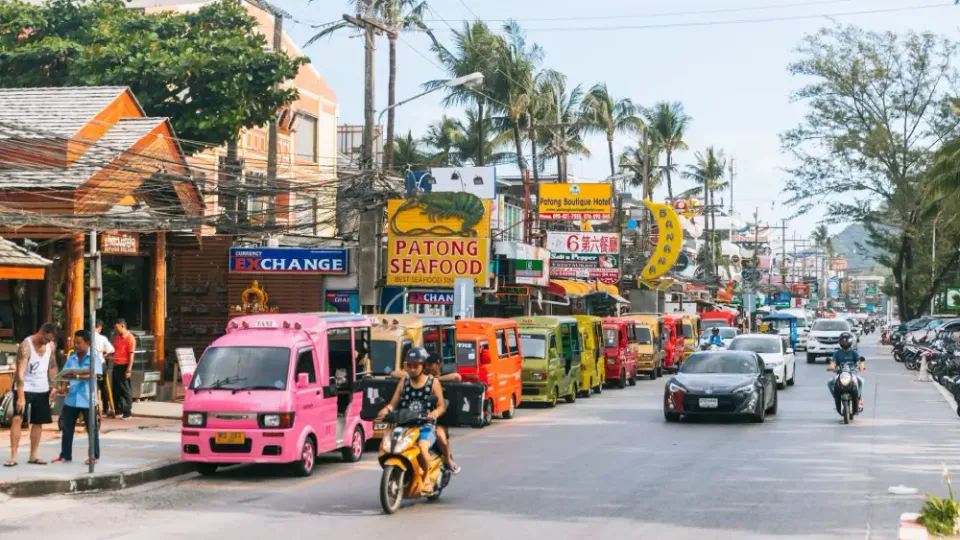
There is no single best area to stay in Phuket. The right choice depends on what you want within walking distance, how often you plan to cross the island, whether the beach matters more than nightlife, and whether you are visiting for one week or living here for several months.
For most first-time visitors, Kata is the best all-round starting point. It combines a good beach, restaurants, markets and a compact resort centre without Patong's intensity. Patong is better for nightlife and maximum convenience; Bang Tao and Cherng Talay suit higher-budget families and longer stays; and Rawai and Nai Harn make more sense for many residents than for travellers seeking a fully walkable beach holiday.
This guide compares Phuket's main tourist and residential areas, including the practical drawbacks that hotel-booking pages often omit. The area profiles and Google Maps listings were checked on 4 August 2026. Businesses, market schedules and local access can change, so verify anything essential before booking.
In this guide
- Quick answer by traveller type
- How to choose the right area
- Main tourist areas compared
- Best areas for expats and long stays
- Common booking mistakes
- Frequently asked questions
Best areas to stay in Phuket: quick answer
| Traveller profile | Best area to consider first |
|---|---|
| First visit | Kata for the best balance of beach, restaurants and walkability. |
| Nightlife | Patong, especially if Bangla Road and late nights are central to the trip. |
| Family beach holiday | Kata, Kamala or Karon, depending on preferred atmosphere and hotel location. |
| Premium family stay | Bang Tao, Laguna or Cherng Talay for resorts, villas and modern services. |
| Culture and local food | Phuket Old Town, with the clear trade-off of no beach nearby. |
| Quiet airport-side stay | Nai Yang for a village feel; Mai Khao for an isolated resort stay. |
| Scenic, quiet southeast coast | Ao Yon or Cape Panwa, provided you are comfortable relying on transport. |
| Long stay in south Phuket | Rawai or Nai Harn for restaurants, fitness and an established international community. |
| Sports, Muay Thai or diving | Chalong, especially around Soi Ta-iad or Chalong Pier. |
| Central residential base | Phuket Town, Kathu or Wichit, chosen according to work and school routes. |
These are starting points, not definitive answers. A hotel at the wrong end of a large district can change the experience completely. Bang Tao, Karon, Kamala and Rawai are especially sensitive to the exact location of the accommodation.
How to choose where to stay in Phuket
The most useful question is not “Which area is best?” It is: what do you need close to your accommodation every day? A traveller who wants restaurants, shopping and nightlife on foot needs a different base from someone who wants a quiet resort, a family villa or a daily commute to an international school.
Choose your daily priority first
- Beach and restaurants on foot: central Kata, parts of Patong, central Karon, Kamala village and parts of Nai Yang are the clearest candidates.
- Nightlife: Patong has Phuket's most concentrated nightlife district integrated into the resort centre.
- Resort facilities: Laguna, Mai Khao and parts of Cape Panwa work best when the hotel itself is a major part of the holiday.
- Local food and culture: Phuket Old Town offers a better urban experience than the west-coast resorts, but it is not a beach base.
- Long-stay daily life: Rawai, Chalong, Cherng Talay, Phuket Town, Kathu and Wichit provide more residential infrastructure than many tourist guides acknowledge.
Do not judge Phuket by distance alone
Phuket is not a compact city with a single centre. Mountains, limited cross-island roads, construction, school traffic and peak tourist periods can make two apparently nearby places inconvenient to combine every day. A northern resort may be close to the airport but poorly placed for repeated trips to Rawai, Kata or Chalong. A villa in southern Phuket may be ideal for Nai Harn and Rawai but frustrating for frequent meetings in Cherng Talay.
For a short holiday, choose the area where most of your evenings and beach time will occur. For a long stay, choose based on your recurring journeys: work, school, training, hospital appointments or childcare. The best-looking beach is rarely worth a difficult daily route.
Check the exact hotel location
“Patong”, “Bang Tao” and “Rawai” are broad booking labels. Before paying, open the property on a map and check the walking route to the places you expect to use. A straight-line distance can hide a steep hill, an unpleasant road, a missing pavement or a long detour.
Also decide whether you are genuinely willing to use taxis or rent a vehicle. Do not choose an isolated property on the assumption that transport will somehow solve every trip.
Match the area to how you will move
Walking works best in compact pockets, not across whole districts. Central Patong, central Kata and Phuket Old Town offer the clearest concentration of restaurants and services on foot. Parts of Karon, Kamala and Nai Yang can also work, but only when the accommodation is close to the relevant centre. A listing that says “10 minutes from the beach” may refer to a drive rather than a comfortable walk.
Taxis and ride-hailing add flexibility but do not erase geography. They are useful for occasional dinners, viewpoints and excursions. They become expensive and time-consuming when every breakfast, supermarket trip and beach visit requires a separate journey. Travellers choosing a remote villa or resort should include those repeated transfers in the real cost of the stay.
A rental vehicle makes large areas more practical, but it should not be assumed automatically. Visitors who do not plan to drive should prioritise a compact centre. Residents who do drive should test the likely commute at busy times rather than relying on an empty-road map estimate.
Boat trips do not all leave from the same place. Chalong is useful for many diving, sailing and trips to islands south of Phuket, while other ferries and tours use different piers or hotel transfers. Staying near one pier only makes sense when repeated departures from that location are central to the trip.
Consider splitting a longer stay
One base is simplest for a short holiday, but a longer trip does not need to force every experience into one neighbourhood. Combining two areas can reduce cross-island travel and make the contrast between them more meaningful.
A first-time visitor could combine Kata or Kamala with Phuket Old Town. A traveller focused on south-Phuket beaches and boat trips could stay near Rawai or Nai Harn, then finish with a quiet airport-side night in Nai Yang. A resort-focused family could combine Bang Tao with a shorter cultural stay in Old Town.
A split stay should solve a geographic problem rather than create extra packing for little benefit. If most planned activities already sit on the same side of the island, one well-chosen base remains more efficient.
For more general planning, see the Phuket Travel Guide and the separate comparison of the best beaches in Phuket.
The main tourist areas in Phuket
Patong: best for nightlife, shopping and maximum convenience
Best for: nightlife, first-time visitors who want constant activity, short stays without a vehicle and travellers who value convenience more than tranquillity.
Not ideal for: quiet couples, families sensitive to noise, travellers seeking a local atmosphere or residents who want a calm long-term base.
Patong has Phuket's densest concentration of hotels, restaurants, tour desks, shopping, nightlife and practical services. This concentration is its real advantage. A visitor can stay near the beach, eat at different price levels, buy holiday essentials and go out at night without planning every journey.
Patong is not only bars. Jungceylon is a major indoor shopping and dining hub, while Banzaan Fresh Market adds fresh food, seafood and casual eating near the centre. Bangla Road remains the defining nightlife landmark.
The main weakness is that Patong's strengths are also its drawbacks. It is busy, commercial and often noisy. The beachfront and central streets can feel intense, while accommodation farther inland may involve hills or less pleasant walking routes. Patong works best when the traveller actively wants its density, not when it is chosen only because it is famous.
Choose Patong if: you want nights out, shopping and restaurants close together. Choose Kata, Kamala or Karon instead if: you want a beach holiday with less pressure and noise.
Kata and Kata Noi: best all-round choice for a first visit
Best for: first-time visitors, couples, families, beach-focused travellers and people who want restaurants and evening activity without Patong-level nightlife.
Not ideal for: travellers seeking isolation, serious nightlife or a perfectly flat neighbourhood.
Kata offers one of Phuket's strongest compromises. The area has a popular beach, a substantial range of restaurants and hotels, markets and enough evening activity to avoid feeling sleepy. It is generally easier to enjoy without a vehicle than Rawai, Bang Tao or Mai Khao, provided the hotel is in the central resort area.
Kata Night Market supports inexpensive evening dining, while Kata Beach Community Park adds a modest public space near the beachfront. Karon Viewpoint overlooks Kata Noi, Kata and Karon, but it requires a ride from most hotels.
Kata Noi is smaller, quieter and more hotel-focused than Kata. It suits travellers who value a calmer beach environment and do not need a large town centre. The trade-off is a narrower choice of restaurants and services within easy walking distance.
The main booking risk is elevation. Some properties marketed as close to Kata are on steep roads or hills. Seasonal waves and currents also matter, so never assume the sea will be equally calm throughout the year.
Choose Kata if: you want the most balanced first-time base. Choose Kata Noi if: you prefer quiet and accept fewer nearby choices.
Karon: best for a long beach and a calmer family stay
Best for: families, couples and travellers who want a broad beach and a less densely developed resort than Patong or central Kata.
Not ideal for: travellers who expect the whole area to be compact and walkable.
Karon is often described simply as a quieter alternative to Patong, but its shape matters. The beach and resort strip extend over a long distance, and the main restaurant clusters are not equally convenient from every hotel. A beachfront property can still be a substantial walk from the evening centre.
Central Karon has more local character than many resort summaries suggest. Wat Suwannakiri Khet, usually called Wat Karon, is the main cultural landmark. Karon Night Market adds food and shopping on operating days. Near the Kata end, Dino Park Mini Golf is a recognisable family attraction.
Karon is a good choice when the hotel itself is well located and the traveller wants space rather than intense nightlife. It is less convincing when a booking platform uses “Karon” for a property isolated from both the beach and the restaurant centre.
Choose Karon if: a broad beach and calmer family atmosphere matter most. Choose Kata if: you want a more compact mix of beach, restaurants and evening activity.
Kamala: best for a relaxed west-coast family base
Best for: families, retirees, couples and travellers who want a calmer west-coast stay within reach of Patong.
Not ideal for: travellers who want extensive nightlife, large-scale shopping or a single compact resort centre.
Kamala combines a beach village, mid-range hotels, luxury hillside properties and family attractions. It is quieter than Patong but not as isolated as Mai Khao or Cape Panwa. This makes it a practical compromise for travellers who want evenings near the hotel and occasional access to busier areas.
The adjacent Phuket FantaSea and Carnival Magic form a major evening-entertainment cluster, particularly relevant to families. Tsunami Memorial Park is a central historical landmark near the village and beach.
The exact sub-area matters. A hotel near the central beach and village offers a different experience from a villa high on the coastal road. Hillside properties may have excellent views but require transport for almost every meal or beach visit.
Choose Kamala if: you want a relaxed, family-friendly base with enough local life. Choose Bang Tao if: you want a larger, more upmarket hub for dining, shopping and services.
Bang Tao, Laguna and Cherng Talay: best for premium families and lifestyle stays
Best for: higher-budget families, resort travellers, villa stays, wellness trips, repeat visitors and residents who want modern services.
Not ideal for: travellers who assume the whole area is one walkable neighbourhood or who want a low-cost, compact resort centre.
Bang Tao, Laguna and Cherng Talay are often grouped together, but they describe different experiences. Bang Tao is the long beach and its surrounding hotel zones. Laguna is a large resort complex. Cherng Talay includes inland residential areas and clusters of restaurants, shops and services. A property can be marketed under any of these names while being inconvenient for the others.
The area's strength is that it works beyond the beach. Porto de Phuket provides modern open-air shopping and dining. Boat Avenue is another restaurant, retail and social hub, while Bang Tao Night Market offers a more local alternative.
This infrastructure helps explain why the area appeals to families and long-stay residents, not only hotel guests. The drawbacks are cost, traffic and scale. A villa inland may require a vehicle for the beach, while a beachfront resort may be inconvenient for Boat Avenue or other daily services.
Choose this area if: you want villas, resorts, modern restaurants and family infrastructure. Choose Kata or Kamala if: you want a simpler and more compact holiday base.
Surin: best for a quiet, upmarket beach stay
Best for: couples, beach-focused travellers and visitors who prefer a smaller, more polished environment.
Not ideal for: travellers who need extensive shopping, markets, nightlife or a complete town centre.
Surin's main attraction is straightforward: Surin Beach. The area has upscale accommodation and restaurants, but it does not offer a major retail and evening hub comparable to Patong, Kata or Cherng Talay.
Laem Sing Beach Viewpoint, on the coastal road toward Kamala, adds a scenic stop but does not change the limited daily infrastructure. The nearest broader concentration of shopping and services is around Cherng Talay.
Surin works best when the beach and hotel are the core of the trip. It is a weaker choice for a first-time visitor who wants many different evening options on foot.
Choose Surin if: you want a refined, beach-centred stay. Choose Bang Tao or Kata if: you want more restaurants, services and variety nearby.
Rawai and Nai Harn: best for south-Phuket lifestyle and longer stays
Best for: repeat visitors, long stays, remote workers, retirees, residents, fitness-focused travellers and people who want the south of Phuket.
Not ideal for: first-time visitors who expect a compact resort, travellers without a transport plan or anyone booking Rawai under the assumption that it has a conventional swimming beach.
Rawai and Nai Harn are linked in everyday life but should not be confused. Nai Harn provides the area's best-known swimming beach and scenic coastal setting. Rawai provides restaurants, cafés, markets, boat access and a much larger residential ecosystem.
Rawai Seafood Market reflects Rawai's seafood and waterfront character. Promthep Cape and Windmill Viewpoint are major nearby scenic landmarks, but both normally require transport.
Rawai Beach is not the area's main swimming beach. It is a working waterfront with boats and nearby island access. Travellers who want to walk directly from the hotel to a classic beach should focus on Nai Harn or another west-coast resort.
The area is strong for daily life: restaurants, gyms, cafés, supermarkets and an established international population. Its biggest weaknesses are vehicle dependence and distance from the airport and northern Phuket.
Choose Rawai/Nai Harn if: you want an established residential base in southern Phuket and are prepared to use a vehicle or taxis. Choose Kata if: you want a more conventional and walkable beach holiday.
Phuket Old Town: best for culture, food and urban character
Best for: local food, cafés, architecture, markets, culture, digital nomads who prefer an urban environment and travellers splitting their stay.
Not ideal for: anyone who wants a beach within walking distance.
Phuket Old Town is the clearest alternative to the island's beach resorts. Its appeal comes from historic streets, Sino-Portuguese architecture, local restaurants, cafés, museums and markets rather than sea views.
Phuket Old Town itself is the principal attraction. Lard Yai Sunday Night Market brings food and street activity to Thalang Road on its operating day, while Phuket Thai Hua Museum provides historical context beyond the photogenic façades.
Old Town can work for two or three nights in a split itinerary, or longer for travellers who care more about food and city life than daily swimming. It should not be treated as a practical beach base: reaching the west-coast beaches still requires regular transport.
Also distinguish Old Town from greater Phuket Town. Major malls and some residential districts lie outside the historic centre. Central Phuket, for example, is in Wichit and is not a walkable Old Town attraction.
Nai Yang: best for a quiet village near the airport
Best for: quiet short stays, arrival or departure nights, couples, families who prefer a village atmosphere and travellers who do not need Phuket's major nightlife areas.
Not ideal for: visitors planning repeated trips to Patong, Kata, Rawai or Chalong.
Nai Yang offers a calmer, greener airport-side alternative to Phuket's large west-coast resorts. It has a distinct beach village rather than only isolated hotels, making it more practical than Mai Khao for visitors who want local restaurants and everyday life nearby.
Sirinat National Park is central to the area's natural identity. Nai Yang Fresh Market adds practical local shopping, and Wat Mongkol Wararam is a nearby cultural landmark.
Nai Yang is particularly effective when the objective is to slow down, stay near the airport or avoid the density of the southern resorts. It is a poor compromise if the itinerary still includes daily nightlife, southern viewpoints and boat departures.
Choose Nai Yang if: you want a quiet village and airport convenience. Choose Kata or Patong if: you want a fuller resort experience.
Mai Khao: best for an isolated resort holiday
Best for: luxury resorts, quiet couples, families staying mainly within the property and travellers who value proximity to the airport.
Not ideal for: independent travellers who want to walk between many restaurants, shops and nightlife venues.
Mai Khao is long, quiet and dispersed. It works best when the resort is expected to provide most meals, activities and entertainment. This is not a destination where the simple phrase “near the beach” guarantees access to a lively neighbourhood.
Mai Khao Beach Flight Viewing Point is a distinctive attraction, although aircraft direction, access and viewing conditions vary. Splash Jungle Water Park is one of the area's few major family attractions. Turtle Village supplies a limited dining and shopping cluster for nearby resorts.
The main caveat is the area's scale. Turtle Village does not make all Mai Khao accommodation walkable, and a resort at another part of the beach may still be isolated.
Choose Mai Khao if: the resort itself is the holiday. Choose Nai Yang if: you want a quieter north-Phuket stay with more village life.
Cape Panwa and Ao Yon: best for quiet views and a self-contained stay
Best for: couples, villas, quiet resorts, bay views and travellers who do not need west-coast nightlife.
Not ideal for: visitors who want spontaneous bar-hopping, major shopping or frequent trips across the island.
Cape Panwa and Ao Yon offer a different Phuket experience from Patong, Kata and Karon. The southeast coast feels quieter and more residential, with bays, villas and self-contained hotels. The area can be attractive to repeat visitors who already understand Phuket's geography.
Phuket Aquarium is the main conventional family attraction. Khao Khad Viewpoint provides panoramic views but requires transport from most accommodation. Ton Ao Yon Waterfall is a smaller natural stop whose water flow and appeal can be seasonal.
Beach and swimming conditions vary by exact bay, tide and season. Do not assume every waterfront property offers the same beach experience. Check the hotel's actual shoreline and recent local conditions.
Choose Cape Panwa/Ao Yon if: privacy and scenery matter more than convenience. Choose Kamala or Bang Tao if: you want a quiet stay with more developed restaurants and services nearby.
Chalong: best specialist base for boats, training and practical south-Phuket access
Best for: Muay Thai and fitness camps, diving, sailing, boat departures and longer stays built around a specific routine in southern Phuket.
Not ideal for: a conventional first-time beach holiday.
Chalong is one of Phuket's most useful districts, but it is rarely the most attractive holiday base. Its value comes from function rather than beachfront atmosphere.
Wat Chalong is one of Phuket's principal cultural landmarks. Chalong Pier is a major departure point for diving, sailing and boat trips. Soi Ta-iad, or Fitness Street, anchors the area's Muay Thai and training identity.
Large supermarkets, shopping centres and services make Chalong practical for residents. However, the central waterfront is not a conventional swimming-beach destination, and traffic around major roads can be frustrating.
Choose Chalong if: your daily activity is located there. Choose Rawai, Nai Harn or Kata if: the beach and holiday atmosphere matter more.
Best areas in Phuket for expats and long stays
A good holiday area is not automatically a good place to live. Permanent residents, winter visitors and remote workers need supermarkets, healthcare, gyms, reliable daily services, practical roads and suitable housing. Families also need to choose around school and childcare routes before choosing a beach.
Choose the area around your actual routine
Families should begin with the school or nursery route. A desirable villa becomes a poor choice when the daily drive crosses the island twice. Cherng Talay and Bang Tao can work well for families whose schools and activities are in northern Phuket. Chalong, Rawai and parts of Phuket Town can be more rational when the family's routine is concentrated in the south or centre.
Remote workers should compare the complete working day, not only the nearest coworking space. Home internet, mobile coverage, cafés, food, exercise and the journey to meetings all matter. Rawai/Nai Harn, Cherng Talay/Bang Tao and Phuket Town offer the broadest combinations, but a quiet property several kilometres inland may still require a vehicle for every break and meal.
Retirees and residents who do not drive should be especially cautious. A calm villa district can become isolating when supermarkets, clinics and social activities are not comfortably reachable. Central pockets of Kamala, Kata, Rawai and Phuket Town may be more practical than a larger house in a remote development, depending on the person's mobility and healthcare needs.
People working in tourism, hospitality or local businesses should live near the workplace rather than following a generic expatriate ranking. Patong can be entirely rational for someone working nights there, while Kathu or Wichit may suit a person commuting to central Phuket. The best area is the one that eliminates the most frequent journeys.
Before signing a long lease, stay in the proposed area first, test the roads at normal commute times and visit the supermarket, gym, clinic and other services you expect to use. The atmosphere and rental market can differ substantially by season and may not match the impression formed during a short holiday.
| Long-stay profile | Area to investigate first |
|---|---|
| South-Phuket lifestyle | Rawai and Nai Harn |
| Higher-budget family | Cherng Talay and Bang Tao |
| Sports or practical southern base | Chalong |
| Urban life and central services | Phuket Town or Wichit |
| Central commute | Kathu, depending on the exact workplace or school |
Rawai and Nai Harn: strongest general long-stay option in the south
Rawai and Nai Harn are among Phuket's most established international residential areas. The attraction is not one landmark but the full range of daily amenities: restaurants, cafés, gyms, wellness businesses, supermarkets, rentals and social networks that remain relevant beyond a one-week holiday.
Remote workers and long-stay visitors can also use the separate guide to Phuket's best coworking spaces when comparing work locations. The main weaknesses remain transport dependence and distance from the airport, Phuket Town and Cherng Talay.
Rawai is better for restaurants, services and residential life. Nai Harn is better for direct access to the beach environment. Many residents use both rather than treating them as separate worlds.
Cherng Talay and Bang Tao: best premium area for families
Cherng Talay and Bang Tao combine villas, condominiums, resorts, supermarkets, restaurants, fitness facilities and family-oriented services. The area is especially attractive to households whose work, school and social life are concentrated in northern or central Phuket.
The decisive factors are budget and exact location. Housing close to the main lifestyle hubs or beach can be expensive, while more distant villas create a daily driving requirement. Families should choose the school route first and the beach second.
Chalong: practical, specialised and often better than it looks
Chalong lacks the visual appeal of Phuket's famous beach resorts, but it can be a rational residential choice. It has supermarkets, shopping, gyms, medical services, training camps and road access to Rawai, Kata, Phuket Town and the east coast.
It is particularly logical for people training on Soi Ta-iad, working around the south or using Chalong Pier regularly. It is much less logical for someone whose daily life is in Cherng Talay or near the airport.
Phuket Town, Wichit and Kathu: best when the commute matters more than the beach
These areas are frequently missing from tourist guides because they are not built around beach hotels. For residents, that can be an advantage. They offer major shopping, hospitals, schools, offices, local markets and access to central roads.
Wichit's Central Phuket and Naka Weekend Market demonstrate the range of amenities available across greater Phuket Town. Kathu has local markets, residential streets and access toward both Patong and Phuket Town, plus attractions such as Kathu Waterfall and Flying Hanuman.
The weakness is obvious: no beach on the doorstep and substantial vehicle dependence. The correct choice depends on the exact recurring route, not the district name.
Patong, Kata, Karon and Kamala: valid for some residents, but not default choices
It is inaccurate to say that expatriates never live in Patong or the tourist resorts. People working in tourism, hospitality and nightlife may benefit from living close to work. Some medium-term visitors also prefer Kata or Karon because they can combine beach access with restaurants and partial walkability.
However, tourist density, seasonal pricing, noise and a limited choice of residential housing can make these areas less efficient for permanent life. Kamala can suit retirees and families seeking a calmer west-coast environment, but the precise location still determines whether daily services are convenient.
Common mistakes when choosing an area in Phuket
Booking Rawai for a swimming beach
Rawai is a valuable waterfront and residential area, but Rawai Beach is not equivalent to Kata, Nai Harn or Kamala as a conventional swimming beach. Check whether the property is near Nai Harn, Ya Nui or another beach rather than relying on the word “beach” in a listing.
Assuming an entire district is walkable
Bang Tao, Rawai, Karon, Kamala and Mai Khao cover large or fragmented areas. A hotel may be technically inside the correct district but poorly placed for restaurants, the beach or shopping. Check the actual walking route on a map before booking.
Choosing by airport distance only
Nai Yang and Mai Khao are convenient for the airport, but that does not make them central to Phuket. They are poor bases for repeated trips to beaches in southern Phuket, activities in Chalong or nightlife in Patong.
Choosing Old Town for a beach holiday
Phuket Old Town is excellent for food and culture, but it has no beach within walking distance. Use it for an urban stay, a split itinerary or a trip where swimming is secondary.
Believing a resort name describes the surrounding neighbourhood
A full-service resort may contain restaurants, shops and activities that are not available to the wider district. Distinguish hotel facilities from public neighbourhood infrastructure.
Ignoring rainy-season sea conditions
Beach conditions change with weather and season. A beach that looks calm in promotional photographs may have waves, currents or restrictions during another period. Check current warnings and never treat swimming conditions as guaranteed.
Using tourist criteria for a permanent move
Nightlife and beach views matter less when the daily reality involves school runs, supermarket trips and work. For a long stay, test the commute at the times you will actually travel before committing to a lengthy rental.
Trying to see the entire island from one inconvenient base
Phuket is large enough that a split stay can be more efficient than repeated cross-island journeys. A longer holiday could combine a southern or west-coast beach area with Old Town or a quieter northern stay.
Frequently asked questions
What is the best area to stay in Phuket for a first visit?
Kata is the best general starting point for most first-time visitors. It offers a popular beach, restaurants, markets and a manageable resort centre without Patong's level of nightlife and noise. Patong is better when nightlife and shopping are the main priorities.
Where should I stay in Phuket without renting a car or scooter?
Central Patong and central Kata are the strongest beach-resort choices for travellers who want to walk to restaurants and shops. Phuket Old Town also works well on foot for food and culture, but not for beach access. Always check the property's exact position because hills and major roads can undermine nominal walkability.
Which area is best for families?
Kata, Kamala and Karon are the main mainstream family choices. Bang Tao, Laguna and Cherng Talay are stronger for higher-budget families who want villas, resorts and modern services. The correct answer depends on whether the family prioritises a compact beach town, organised entertainment or a larger residential area with more services.
Which area has the best nightlife?
Patong is the clear answer. Bangla Road and the surrounding centre provide Phuket's largest concentration of bars, clubs and late-night activity. Other areas have beach clubs, bars and evening markets, but none offers the same integrated nightlife district.
What is the quietest area to stay in Phuket?
Mai Khao, parts of Nai Yang, Surin, Ao Yon and Cape Panwa can all provide quiet stays. They are not interchangeable: Mai Khao is resort-oriented and isolated, Nai Yang has more village life, Surin is beach-focused, and Cape Panwa/Ao Yon require more transport.
Is Rawai a good area for tourists?
Rawai is well suited to repeat visitors and long stays, with restaurants, seafood, boat access and a more residential atmosphere. It is less suitable for a first-time visitor who wants a compact resort with a swimming beach directly outside the hotel. Nai Harn is the nearby beach-focused alternative.
What is the best area in Phuket for expats?
There is no universal expatriate area. Rawai/Nai Harn is the strongest general option for south-Phuket lifestyle; Cherng Talay/Bang Tao suits higher-budget families; Chalong is practical for sport and southern routines; Phuket Town, Wichit and Kathu are better when work, school and central services matter more than the beach.
Should I stay in one area or split my Phuket trip?
One area is simpler for a short trip. For a longer stay, splitting the holiday can reduce unnecessary driving and create two genuinely different experiences. Common combinations include a west- or south-coast beach area with Phuket Old Town, or an active stay in the south followed by a quiet northern resort.
Which Phuket area is most convenient for the airport?
Nai Yang and Mai Khao are the main airport-side choices. Nai Yang is better for a village and independent restaurants; Mai Khao is better for an isolated resort stay. Neither is a central base for exploring the whole island.
Where should remote workers stay in Phuket?
Rawai/Nai Harn, Cherng Talay/Bang Tao and Phuket Town are the strongest general options because they combine housing, cafés, services and established long-stay communities. The final choice should follow the coworking location, daily routine and transport plan rather than beach reputation alone.
Final recommendation
Choose Kata for the best all-round first visit, Patong for nightlife and maximum convenience, Bang Tao/Cherng Talay for an upmarket family or long-stay base, and Rawai/Nai Harn for a longer south-Phuket base. Choose Phuket Old Town when food and culture matter more than the beach, Nai Yang for a quiet airport-side village, and Mai Khao or Cape Panwa when the resort and seclusion are the point of the trip.
The most important step is to examine the exact property location rather than trusting the district name. In Phuket, the difference between an excellent stay and an inconvenient one is often not the area itself, but the exact part of the area you chose.