Living in Rawai Phuket 2026: Costs, Rent, Schools & Expat Life
Thinking of living in Rawai, Phuket? Compare 2026 rent, daily costs, schools, healthcare, transport and long-stay life for families and remote workers.
Quick answer: Rawai is one of southern Phuket's most practical long-stay bases if you want a quieter residential area with restaurants, groceries, gyms, schools, childcare, clinics and remote-work options nearby. The main compromise is mobility: Rawai is spread out, pavements are limited, traffic can be frustrating, and many residents rely on a scooter, car or ride-hailing for everyday trips. It is especially well suited to families, remote workers, long-stay couples and people whose routine revolves around fitness or Muay Thai.
Your experience of Rawai depends heavily on the exact address. Living near Sai Yuan creates a different daily routine from living on the beachfront or close to Nai Harn. Before signing a lease, look beyond the property itself and map the places you will use every week: school, supermarket, gym, coworking space, beach and main roads.
In this guide
- Is Rawai a good place to live?
- Cost of living in Rawai
- Long-term rent and leases
- Schools, healthcare and daily life
- Remote work, transport and lifestyle
- Pros, cons and lease checklist
Is Rawai a good place to live?
For the right person, yes. Rawai has enough everyday services to function as a genuine home base rather than somewhere you constantly need to leave for basic errands. Supermarkets, local markets, restaurants, international dining, gyms, Muay Thai camps, coworking spaces, nurseries, schools and private clinics are all available within the wider Rawai area.
What Rawai does not give you is a compact, highly walkable town centre. The area stretches across several residential pockets, and a five-minute scooter ride can become an awkward walk in heat or rain. Mobility therefore needs to be part of the decision before you move here.
| Resident profile | How well Rawai fits |
|---|---|
| Families with children | Strong fit if housing is chosen around the school commute. Rawai has local school and childcare options, but traffic toward Chalong can shape the daily routine. |
| Digital nomads and remote workers | Strong fit for people who want a quieter base with dedicated coworking, gyms and restaurants. Less suitable if you want a dense, fully walkable nomad district. |
| Couples and long-stay residents | Strong fit if you value routine, food, beaches and a residential atmosphere more than nightlife. |
| Retirees | Potentially a good fit for the quieter lifestyle and local services, provided transport and access to full hospitals are acceptable. |
| Fitness and Muay Thai residents | Excellent fit. Rawai has a wide choice of gyms and combat-sports training, with beaches and plenty of dining options nearby. |
| People who want nightlife and walkability | Usually a weaker fit. If you want to walk everywhere and be close to major nightlife, another part of Phuket may suit you better. |
What Rawai feels like day to day
Rawai is quieter than Phuket's major west-coast tourist centres, but it is not isolated. The area mixes Thai residents, long-stay foreigners, families, remote workers, fitness-focused visitors and seasonal residents. Restaurants and cafes are plentiful, and Rawai stays active without feeling like it is permanently in holiday mode.
That quieter character is also why opinions differ so much. Some long-stay residents settle easily into the routine and return repeatedly; others find the area too spread out or too quiet. If your ideal neighbourhood means stepping outside and walking to almost everything, Rawai can be frustrating. If your ideal day revolves around home, work, the gym, good food and the beach, it can be an excellent base.
Rawai, Sai Yuan and Nai Harn: understanding the area
People often say they live in “Rawai” even when their daily life is centred on Sai Yuan or Nai Harn. For long-term living, these micro-areas matter more than the administrative label.
Rawai beachfront and Wiset Road
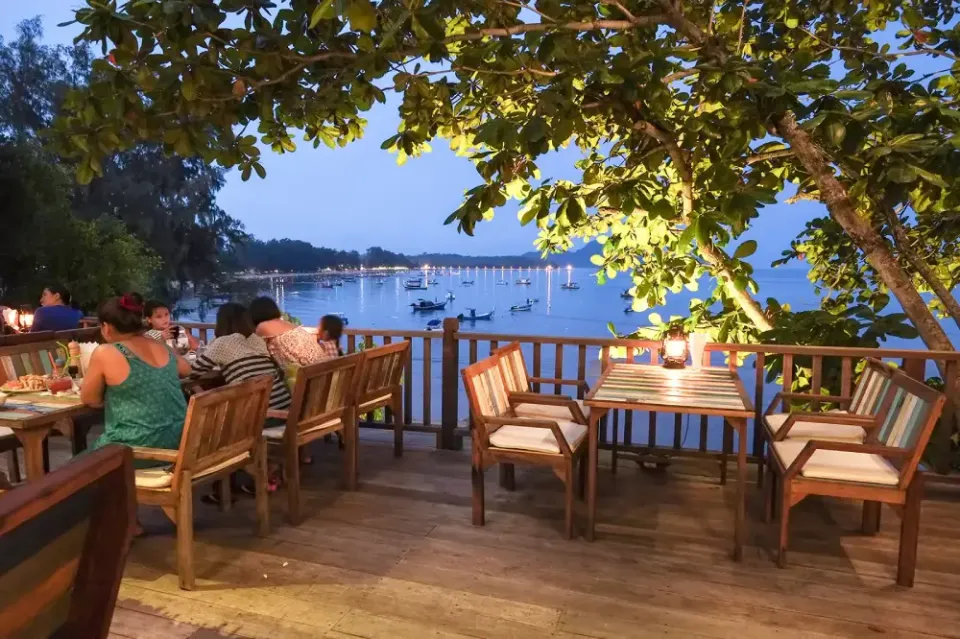
The beachfront gives you restaurants, seafood, boat activity and a more visible coastal atmosphere. It can work well if you like being close to the water and want easy access to the southern tip of Phuket.
Do not choose it because you expect to swim directly from Rawai Beach every day. Rawai Beach is primarily a working waterfront and boat-launch area. For regular swimming, nearby Nai Harn is the more practical beach. Rawai.com's guide to Phuket's best beaches covers the wider beach options in more detail.
Sai Yuan and inland Rawai
Sai Yuan is especially convenient for everyday life. Supermarkets, restaurants, childcare, gyms and residential developments are spread through the area, so you are not dependent on a beachfront strip. Current rental stock also includes some of Rawai's lower-priced long-term one-bedroom options.
For many long-stay residents, Sai Yuan offers the best balance between convenience and a residential feel. The downside is the same one that applies across Rawai: the area is spread out, and even when several useful places are nearby, the route between them is not necessarily pleasant on foot.
Nai Harn
Nai Harn suits people who want the beach to be a central part of daily life. Living close to the lake and beach gives you one of southern Phuket's best swimming areas while keeping Rawai's restaurants and services within easy reach.
The exact address matters. A condo near the main roads can be convenient; a villa deeper into a residential lane may be peaceful but make every grocery run or school trip more dependent on transport.
How much does it cost to live in Rawai in 2026?
A single “average monthly cost” is not very useful for Rawai because housing and lifestyle choices create such a wide spread. Someone renting a simple one-bedroom property, riding a scooter and eating local food can spend far less than a family in a pool villa paying international-school fees and eating out frequently.
The clearest way to budget is to separate housing, food, transport and utilities rather than starting from one headline number.
Housing is the biggest variable
2026 asking prices range from basic one-bedroom accommodation in the mid-teens to six-figure monthly rents for premium villas. Lease length matters too: a property offered at a reasonable annual rate can be much more expensive for a three- or six-month stay.
Food and restaurants
Rawai offers everything from local Thai food and markets to casual international restaurants and more expensive dining. As a rough Phuket-wide reference, a simple restaurant meal is around THB 150, although the actual bill varies widely by venue and what you order.
Cooking at home is easy because Rawai has Makro, GO Wholesale, SuperCheap branches and smaller local stores. Imported products and premium Western groceries can push the food budget up quickly, while local produce and Thai staples keep it much lower.
If you are planning a shorter stay and want broader Phuket-wide travel costs, see our Phuket trip cost guide. Long-term living is different because annual rent, utilities and routine spending replace hotel and sightseeing costs.
Electricity, water and internet
Air-conditioning is usually the biggest household utility variable. Thailand's residential electricity tariff is progressive and includes a variable Ft component, so there is no honest single per-kWh figure that applies to every household bill.
Rental contracts also differ. Some properties charge electricity at the government rate, while others bill utilities through the landlord or accommodation operator. Water and Wi-Fi may be included, separately metered or charged at a fixed monthly amount. Before signing, ask exactly how each utility is calculated and who issues the bill.
For remote workers, fibre availability is address-specific. The important question is not the advertised maximum speed, but whether the exact condo or villa can receive the connection you need.
Transport
A scooter is often the cheapest and most convenient way to move around Rawai for residents who are legally licensed and comfortable riding in Phuket traffic. As a rough reference, basic monthly rentals can fall in the low thousands of baht, although the price varies by bike, season, insurance and rental period.
Residents who do not ride can use Grab, Bolt, taxis and private drivers. That makes living without a scooter possible, but frequent short trips can add significantly to the monthly budget. Our Phuket transport app and taxi guide explains the main options.
Long-term rent in Rawai: condos, houses and pool villas
The ranges below are based on 2026 asking prices, not completed rental transactions. They are useful for budgeting, but they are not guaranteed rates. Property age, furnishing, exact location, season, pool maintenance and lease duration can all change the price.
| Property type | 2026 asking-price range |
|---|---|
| Basic or older 1-bedroom | About THB 14,000–19,000/month on many annual-lease examples |
| Standard 1-bedroom condo | About THB 25,000–30,000/month for many annual-lease examples |
| Basic 2-bedroom non-pool house | About THB 22,000–27,000/month in simpler annual-lease stock |
| 2-bedroom private-pool villa | Broadly THB 58,000–80,000/month |
| 3-bedroom private-pool villa | Broadly THB 65,000–90,000/month; premium stock can exceed THB 100,000 |
Annual lease versus three to six months
Do not assume that dividing an annual rent by 12 gives you the price for a shorter stay. Current listings show substantial premiums for shorter contracts. One current one-bedroom example was advertised at THB 30,000/month on a yearly contract versus THB 55,000/month for a three- to six-month term.
That does not mean every short lease costs 80% more. It shows why you need to compare the exact lease duration rather than relying on a generic “monthly rent” figure.
Deposit and advance rent
Current listings commonly show one or two months' security deposit plus advance rent, but terms vary. Confirm the amount, refund conditions, notice period and permitted deductions in the written contract before transferring money.
For villas, also ask whether pool service, garden care, pest control and cleaning are included. A cheaper headline rent can be less attractive once recurring services are added.
Where to look for a long-term rental
Property portals are useful for understanding the market, but long-stay residents also use local agents, property managers, Facebook groups and direct contacts. Listings can remain online after availability changes, so treat the online price as the start of the conversation rather than proof that the property is still available on your dates.
If possible, stay in Rawai first and view properties in person. Street noise, construction, road access, drainage, parking and the actual distance to your daily routine are difficult to judge from listing photos.
Who Rawai suits best
Families with children
Rawai can work very well for families because it combines residential housing with schools, nurseries, supermarkets, clinics, sports facilities and beaches. The important decision is not simply “Is Rawai family-friendly?” but “Can we live close enough to the school and still have the rest of our daily routine nearby?”
School runs through busy parts of southern Phuket can become the dominant daily commute. A villa that looks perfect on a map can be a poor choice if it creates two difficult trips every weekday.
Digital nomads and remote workers
Rawai is a strong option for remote workers who prefer a relaxed residential routine over a dense nomad district. Dedicated coworking spaces exist, while cafes, gyms and lunch options are easy to find around Sai Yuan, Nai Harn and the beachfront.
The catch is distance. You may have a good coworking space, gym and supermarket within a few kilometres, but not on the same walkable block. If that works for you, Rawai can be a comfortable place to work for several months. For specific venues and current passes, use our Phuket coworking guide.
Couples and general long-stay residents
Rawai works especially well for people who settle into a routine. You can build a day around breakfast, work or errands, a gym session, dinner and the beach without needing the entertainment density of Patong or a large shopping district.
That simplicity is a strength if you are staying for months rather than trying to maximise sightseeing every day. It is a weaker fit if you regularly need Phuket Town, the airport or northern Phuket.
Retirees
The quieter atmosphere, restaurants, local clinics and choice of condos and villas can make Rawai attractive for retirees. The main question is mobility. If you do not want to drive or ride, choose a property close to the services you use most and budget for ride-hailing or taxis.
Routine healthcare is available locally, but full hospital care is elsewhere on the island, which is worth considering if frequent specialist appointments are part of your life.
Fitness and Muay Thai-focused residents
Fitness is one of Rawai's clearest strengths. The area has a wide range of gyms, strength and conditioning facilities, combat-sports training and recovery services. You can see the broader options in our Phuket gym guide.
If Muay Thai is the main reason for your stay, our dedicated Rawai Muay Thai camps guide compares training styles, prices and accommodation instead of repeating those details here.
Schools, childcare and everyday services
International School of Phuket (ISP)
International School of Phuket is in Rawai and offers Cambridge-oriented programmes. It is one of the most relevant local options for families who want to avoid a daily school run to another part of the island.
The school accepts year-round admissions subject to availability and also publishes short-term enrolment options. Fees and programme details change, so check the official ISP website before making a housing decision. ISP's current official pages show two different street numbers, so confirm the exact address directly with the school before travelling there for the first time.
Lighthouse International School Phuket
Lighthouse also operates in Rawai, with kindergarten, primary and secondary programmes. Its published fee structure includes tuition plus separate registration, annual and insurance charges depending on the programme.
For families comparing schools, contact admissions first, confirm availability for the child's year group and understand the full annual cost before narrowing the housing search. For 2026/27, Lighthouse lists annual primary tuition of roughly THB 270,000–290,000 for Grades 1–6 and secondary tuition of roughly THB 313,000–348,000. Registration, annual and insurance charges are additional. Check the official Lighthouse fee page for the latest figures.
Childcare and early years
Rawai has a deeper nursery and preschool market than a tourist map might suggest, with several international and multilingual early-years options around Rawai and Sai Yuan.
Do not choose childcare from a Google rating alone. Visit the facility, ask about language, curriculum, staff continuity, operating hours, meals, nap arrangements and short-term enrolment if those points matter to your family.
Groceries and everyday shopping
Rawai covers most routine shopping needs locally. Makro, GO Wholesale, SuperCheap and smaller stores handle day-to-day groceries without a trip to Phuket Town. There are also local markets and many independent food shops.
Restaurants are another strong point. You can eat Thai food cheaply, find international comfort food or spend considerably more at premium venues. For specific places, see our Phuket restaurant guide.
Healthcare: local clinics and full hospitals
Rawai has several private clinics for routine consultations, minor illness, wound care, tests and general outpatient needs. Bangkok Phuket Clinic Rawai is an established local option, but it is a clinic rather than a 24-hour full-service hospital.
For emergency and hospital-level care, the main facilities are outside Rawai. Dibuk Hospital is about 13 km from Rawai Beach, roughly 20–30 minutes by car under ordinary conditions. Bangkok Hospital Phuket is about 18 km away, roughly 30–45 minutes by car. These are travel estimates, not emergency-response guarantees, and Phuket traffic can make the trip longer.
If regular specialist treatment is important, check where the relevant doctor or department is located before choosing a lease. A peaceful villa at the southern end of the island may be less practical if you expect frequent appointments in Phuket Town.
Working remotely in Rawai
Rawai has enough coworking and internet infrastructure to support full-time remote work, but the quality of your setup depends heavily on the property. Do not sign a long lease based only on “Wi-Fi included.” Ask for the provider, connection type and an actual speed test from the unit if your work depends on video calls or large uploads.
A dedicated coworking membership can solve reliability and call-space problems, especially if you work unusual hours. Rawai has options around the beachfront and inland areas, while cafes are useful for lighter work.
What Rawai offers remote workers is lifestyle rather than density: you can combine work with gyms, beaches and restaurants without living in a nightlife centre. The drawback is that those places may be several short rides apart rather than steps from one another.
Getting around Rawai
Do you need a scooter?
No, but many residents find one very convenient. Rawai's roads and residential lanes cover a large area, and pedestrian infrastructure is inconsistent. A scooter turns many awkward trips into quick errands.
If you ride, make sure the licence or permit you use is valid for the vehicle class in Thailand and that your insurance conditions are compatible with it. Phuket traffic is not a good place to learn from scratch.
Living without a scooter
Living without one is possible if you choose the address carefully. Grab, Bolt, taxis and private drivers cover the area, and Phuket Smart Bus serves Rawai, including stops around Sai Yuan and the beachfront.
The trade-off is cost and spontaneity. Calling a car for every grocery run, gym session or school trip can become expensive and slower than having your own transport.
Airport and north-island access
Airport access is one of Rawai's clearest drawbacks. Phuket International Airport is about 46 km by road from Rawai Beach. Allow roughly 1–1.5 hours by car depending on traffic, and more during heavy congestion.
If you fly every week, work in the north of Phuket or regularly travel to Bang Tao, Mai Khao or the airport, southern Phuket may become tiring. For alternatives elsewhere on the island, see our guide to the best areas to stay in Phuket.
Beaches, fitness and day-to-day lifestyle
For long-stay residents, the appeal is how easily daily life can fall into a routine. Nai Harn gives you a proper swimming beach, Ya Nui is close for a smaller-beach day, and the Rawai waterfront works well for restaurants, local atmosphere and boat departures.
Fitness is easy to integrate into daily life because the area has a high concentration of conventional gyms, functional training, Muay Thai and recovery services. Together with a strong restaurant scene and relatively low-key evenings, that suits people who want a consistent routine rather than constant nightlife.
Pros and cons of living in Rawai
| Pros | Cons |
|---|---|
| Strong everyday infrastructure for long stays | Weak walkability in many residential pockets |
| Good mix of condos, houses and pool villas | Short leases can be much more expensive than annual contracts |
| Local schools, childcare, clinics and supermarkets | School and work commutes can be affected by southern Phuket traffic |
| Strong coworking, gym and Muay Thai scene | Most daily routines are easier with transport |
| Close to Nai Harn and southern Phuket beaches | Rawai Beach itself is not the main swimming beach |
| Quieter than major nightlife areas | Long trip to the airport and northern Phuket |
Before signing a long-term lease in Rawai
A good property in the wrong location can make daily life unnecessarily difficult. Before paying a deposit, check the contract and the neighbourhood with the same care.
- Lease length: confirm whether the quoted rent applies to 12 months, six months, three months or a monthly stay.
- Deposit and advance rent: record the amount, refund conditions and notice requirements in writing.
- Electricity and water: ask whether you pay the utility directly, the government rate through the landlord, or a marked-up accommodation rate.
- Internet: confirm fibre availability at the exact unit and test the connection if remote work is important.
- Villa services: check whether pool cleaning, garden care, pest control and housekeeping are included.
- Daily commute: test the route to school, work, gym and supermarket at the times you will actually travel.
- Parking and access: inspect the lane, drainage, lighting and parking rather than relying on listing photos.
- Condition report: photograph the property, furniture and existing damage when you move in.
- Construction and noise: check neighbouring plots and visit at different times of day if possible.
Visa orientation for a long stay
Your right to stay in Thailand is separate from your choice to live in Rawai. Thailand currently has different visa categories for work and business, retirement, Long-Term Resident status, the Destination Thailand Visa and other purposes. Eligibility depends on nationality, purpose and current rules, which can change.
Use the official Thai e-Visa portal or the relevant Thai embassy/consulate for your circumstances rather than relying on a neighbourhood guide for immigration advice.
Frequently asked questions
Is Rawai good for expats?
Yes, particularly for long-stay residents who want a quieter southern Phuket base with good restaurants, groceries, gyms, schools, clinics and beaches nearby. The biggest compromise is weak walkability and the need for regular transport.
Is Rawai good for digital nomads?
Yes. Rawai has dedicated coworking spaces, cafes and practical fibre options, plus a strong fitness and restaurant scene. It is better for remote workers who want a relaxed routine than for people looking for a dense, walkable nomad district.
Is Rawai good for families?
It can be excellent for families, but choose the school before the house. Rawai has local school and childcare options, while other international schools may require regular trips toward Chalong or farther north. The school run can matter more than being a few minutes closer to the beach.
How much is long-term rent in Rawai?
2026 asking prices start around THB 14,000–19,000/month for some basic or older one-bedroom annual rentals. Many standard one-bedroom condos are around THB 25,000–30,000. Two-bedroom private-pool villas commonly move into roughly THB 58,000–80,000, while many three-bedroom pool villas are around THB 65,000–90,000 and premium properties can exceed THB 100,000. Shorter leases can cost substantially more.
Do you need a scooter in Rawai?
No. Ride-hailing, taxis and the Smart Bus make it possible to live without one. However, Rawai is spread out and not consistently pedestrian-friendly, so a scooter or car is convenient for many residents who are legally licensed and comfortable with Phuket traffic.
Is Rawai Beach good for swimming?
Rawai Beach is mainly a working waterfront and boat area rather than the neighbourhood's main swimming beach. For regular swimming, Nai Harn is the more practical nearby choice.
How far is Rawai from Phuket Airport?
From Rawai Beach, Phuket International Airport is about 46 km by road. Allow roughly 1–1.5 hours by car depending on traffic, with extra margin at busy times.