
Phuket plan proposes taller buildings and 25% cut to yellow-zone development
A revised Phuket planning framework could allow buildings up to 60 metres in red zones while reducing developable area in yellow zones by 25%, prompting a likely shift towards luxury villas. Investment by nine major property and retail groups has reached B202.
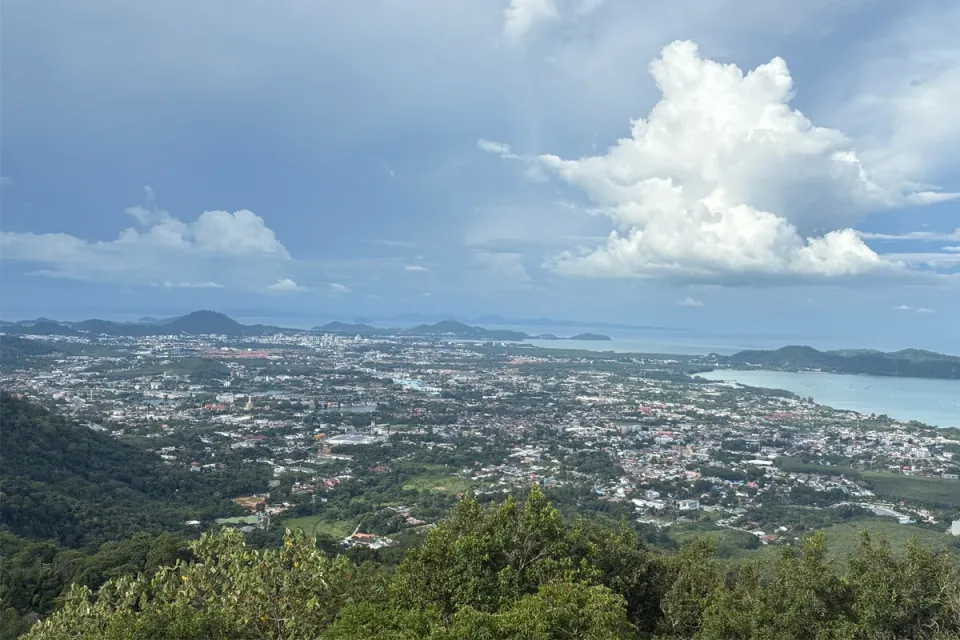
A proposed revision to Phuket’s comprehensive plan could allow buildings up to 60 metres in red zones and 45 metres in orange zones while cutting developable area in yellow zones by 25%, according to a Prachachat Business report published on 1 August 2026.
The revision follows a 2024 notification from Thailand’s Ministry of Natural Resources and Environment that limits building height across the island to 23 metres. Phatthanan Pisutthiwamon, a former president of the Phuket Real Estate Association, said the conflicting rules were the reason for revising the comprehensive plan. If brought into force, developments would have to follow the height limits set by the new plan.
Yellow zones face tighter limits
Yellow zones would retain a maximum height of 23 metres but would be divided into four shades with different floor-area-ratio (FAR), open-space and green-cover requirements. Overall, developers would be able to build on about 75% of a site, reducing usable development area by 25%.
The yellow zones are spread across the island, including Kathu, outer areas of Phuket city, Thalang and Chalong near major roads. Phatthanan said developers had rushed to seek permits for almost 10,000 condominium units because the reduction in usable space would affect project costs.
Orange zones, which cover smaller areas of Patong, Phuket city, Kata and Chalong, would have different FAR limits by shade. Red commercial zones are concentrated in Patong, Kata and Phuket city and could be used for all types of development except factories.
Green zones would permit detached and semi-detached houses, while commercial buildings could occupy only 5% of the permitted area. Dark-green zones cover mountains, forests and conservation areas where detached houses may be developed. Green-and-white striped zones, described as semi-degraded forest areas, would allow small detached houses and hotels with no more than 2,000 square metres of usable space, with a height limit of 15 metres, or about four to five storeys.
Phuket’s old town would become a special zone with a height limit of 9 metres, equivalent to two or three storeys.
Singapore-inspired approach
Phatthanan said land in the yellow, orange and red zones had reached B30 million-B100 million per rai. At those prices, a 23-metre height limit could make construction uneconomic. He described the new planning concept as similar to Singapore’s approach, combining greater building height with more green space and rules intended to avoid blocking airflow.
Energy-efficient buildings could receive additional FAR bonuses and be allowed to build higher, he said.
The impact would vary by area. Beachfront land in Patong costs about B30 million per rai and buildings are currently limited to 15 metres. Even if the revised plan allowed red-zone buildings there to reach 20 metres, demolishing existing buildings to redevelop them would not provide enough benefit to justify the higher costs, according to Phatthanan.
Land in Kata and Karon could rise from B40 million-B50 million per rai to B60 million-B80 million because more undeveloped land remains there, although the overall market was expected to be less heated than in the past.
Phatthanan said tighter yellow-zone rules would not significantly stimulate investment in condominiums, as higher costs would feed through into housing prices while purchasing power had not increased. He expected more development of detached houses and pool villas, particularly luxury projects.
Developers shift towards villas
Local Phuket developers have generally focused on villas across price ranges, including small projects of fewer than 10 rai with as few as nine units. Applications for land allocation in the province have fallen by more than 50% from the previous year, Phatthanan said.
He attributed the decline to weak purchasing power among Thai buyers, unsuccessful loan applications, high household debt and a struggling mass-market segment. Developers were instead turning to smaller projects aimed at wealthier buyers, particularly foreign customers who continued to arrive.
He also said action against nominee arrangements and the constraints of 30-year leases were affecting foreign buyers’ decisions. Extending leases to 50 years, with conditions such as restrictions on inheritance transfers and a requirement to sell back when leaving the country, could improve overseas buyers’ confidence, he suggested.
Major investments reach B202.512 billion
Prachachat Business reported that nine major property and retail groups had investments in Phuket worth a combined B202.512 billion.
Land and Houses has a 36-unit pool-villa project valued at B1.5 billion. Ananda has launched pool villas valued at B50 billion, while Sansiri has accumulated more than 30 projects worth B40 billion and plans to increase its Phuket portfolio to B80 billion by 2030.
SC Asset, working with local developer Boat Pattana, is developing the B700 million Sea Theatre Rawai super-luxury villa project and plans to build a Phuket portfolio worth B8 billion over three years. AssetWise and Rom Pho Property have developed 16 projects worth B47.447 billion since 2023, with six more projects worth B10.1 billion planned for 2026. The companies also hold a Phuket land bank valued at B50 billion.
Orasirin Holding is making its first Phuket investment with a B1.115 billion condominium project. Kanda Property plans two projects in Thalang in 2026, including B650 million pool villas in Choeng Thale, as well as two-storey townhouses, semi-detached houses and pool villas in Bang Tao.
Central Pattana is investing B7 billion to expand Central Phuket Phase 2, taking its accumulated investment in Phuket to B26 billion. Related company CG Capital has launched a residential brand valued at B5 billion and plans a new project at Layan featuring condominiums, villas and a hotel.
The Mall Group has previously announced plans to invest more than B20 billion in a major project on about 150 rai in central Phuket.